
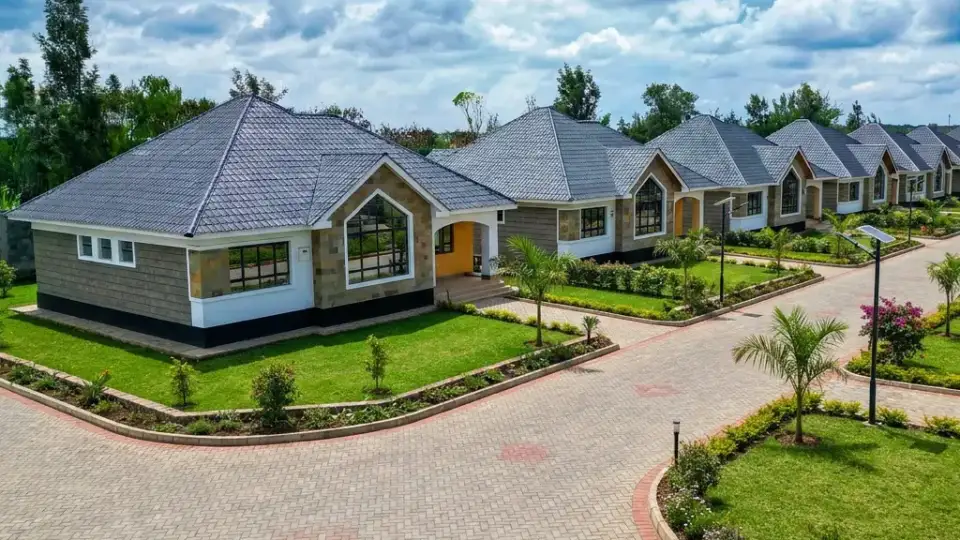
For many Kenyans, paying rent has become a normal part of adult life. From young professionals starting their careers to families raising children in Nairobi and surrounding towns, monthly rent is often treated as a permanent household expense. However, an important financial question deserves attention: What does a decade of paying rent mean for someone who has not made meaningful progress towards owning a home?
The conversation about homeownership in Kenya is not simply about choosing between renting and buying. It is also about understanding how household income is spent, how financial priorities evolve and whether today's housing decisions support tomorrow's aspirations. With more people exploring Homes for Sale in Kenya, understanding the long-term implications of renting can help prospective buyers make more informed decisions.
Ten Years of Rent: Where Does the Money Go?
Consider a household paying KSh25,000 in monthly rent. Over one year, this translates into KSh300,000. Over five years, the total reaches KSh1.5 million, while ten years of payments amount to KSh3 million.
See what is available now.View homes
Rental period | Monthly rent | Total rent paid |
|---|---|---|
1 year | KSh25,000 | KSh300,000 |
5 years | KSh25,000 | KSh1,500,000 |
10 years | KSh25,000 | KSh3,000,000 |
These figures assume that rent remains unchanged. In reality, rental costs can increase over time, meaning households could spend considerably more over the same period.
Rent provides accommodation, convenience and access to locations that might otherwise be difficult to afford. The bigger concern is remaining a tenant for years without establishing a savings or property acquisition plan.
Read Also: Kenya High Court Ruling on Family Land Inheritance: Can a Parent Leave Property to Just One Child?
The Difference Between Paying for Accommodation and Building an Asset
One fundamental distinction between renting and homeownership is the nature of the financial commitment. A tenant pays for the right to occupy a property, while a homeowner acquires an asset that can provide long-term residential security and potentially appreciate in value.
Property ownership comes with responsibilities, including maintenance, repairs, insurance and other expenses. Property values can also fluctuate depending on location, infrastructure and market demand. Nevertheless, a properly acquired home can become an important component of a household's long-term financial position.
This becomes particularly important as individuals approach retirement. Owning a residential property can reduce dependence on rental accommodation during a period when employment income may have declined or stopped altogether.
What Kenya's Housing Statistics Reveal
The challenge of homeownership is particularly evident in urban Kenya. According to the Kenya National Bureau of Statistics (KNBS) 2023/24 Kenya Housing Survey, approximately 72.3% of urban households were paying rent or leasing their accommodation, compared with 22.8% that owned their homes.
The survey also found that 62.6% of tenants who expressed a desire to own homes had not made concrete plans towards achieving homeownership.
These findings highlight an important gap between wanting a home and taking practical steps towards acquiring one. For many households, the challenge is translating a long-term aspiration into a realistic financial and property acquisition plan.
Read Also: Beyond the Beautiful Exterior: What Makes a Modern Home Worth Coming Home To?
The Opportunity Cost of Delaying Your First Home Purchase
Money committed to rent cannot simultaneously be used to acquire property. This creates an opportunity cost, particularly when households spend years meeting rental obligations without setting aside anything towards their future home.
Consider two individuals with similar incomes. One continues renting without a structured homeownership plan, while the other maintains a rental arrangement but consistently saves towards purchasing land or a residential property.
After several years, their financial positions could look very different. One may have accumulated little towards property ownership, while the other may have acquired a plot or established a financial foundation for purchasing a house.
The difference is not necessarily income. It could simply be consistent financial discipline and having a clear objective.
Homeownership Does Not Have to Happen Overnight
A common misconception is that owning a home requires having millions of shillings readily available. While purchasing a completed house requires substantial financial preparation, there are different routes towards acquiring residential property.
Some buyers begin by purchasing land for sale in Kenya and planning construction later. Others prefer completed houses because they eliminate the responsibilities associated with managing an independent construction project.
For prospective buyers exploring Homes for Sale in Kiambu or other emerging residential locations, comparing completed houses, off-plan developments and verified plots can help identify an option that matches their financial capacity.
At Willstone Homes, prospective homeowners can explore residential opportunities, including completed and off-plan houses as well as verified plots in selected locations across Nairobi, Kiambu and surrounding areas. Whether someone is searching for an affordable house for sale or land for future construction, there are different starting points for planning the transition from renting to ownership.
Location Can Make the Transition More Affordable
For many Nairobi residents, property prices within established neighbourhoods can make homeownership appear out of reach. However, expanding residential developments in surrounding areas offer additional choices for families seeking a balance between affordability, space and accessibility.
Locations along Thika Road, Juja, Ruiru, Kiambu, Kangundo Road, Kamulu, Ruai, Joska and Malaa are worth exploring.
Buying outside the most expensive urban neighbourhoods may provide access to more space or a different property category within one's budget. However, buyers should also consider commuting expenses, road infrastructure, schools, healthcare and other everyday amenities.
The objective should be to find a property and location that support both financial sustainability and the family's preferred lifestyle.
Read Also: The First House Is Rarely the Dream House: Why Getting Onto the Property Ladder Matters
Your Rent Payments Should Not Define Your Financial Future
Renting serves an important purpose, particularly for people who need flexibility because of employment, business or changing family circumstances. It can also be the sensible choice when purchasing a property would stretch household finances beyond a comfortable level.
However, renting should not prevent people from planning for ownership. Households can continue enjoying the flexibility of rental accommodation while building savings, researching suitable locations and evaluating available properties.
Ten years can pass surprisingly quickly. For someone paying KSh25,000 monthly, that period represents KSh3 million in rental payments, assuming no increases. For those who dream of owning a home, the opportunity to start planning should not be postponed indefinitely.
Willstone Homes believes that the journey towards homeownership begins with informed decisions. Whether you are exploring Homes for Sale in Kenya, considering Homes for Sale in Kiambu, or searching for verified plots for sale in Kenya, exploring the right opportunities today could bring you closer to a more secure tomorrow.