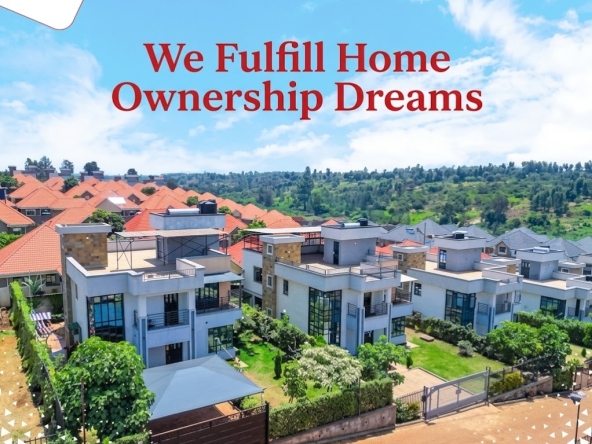
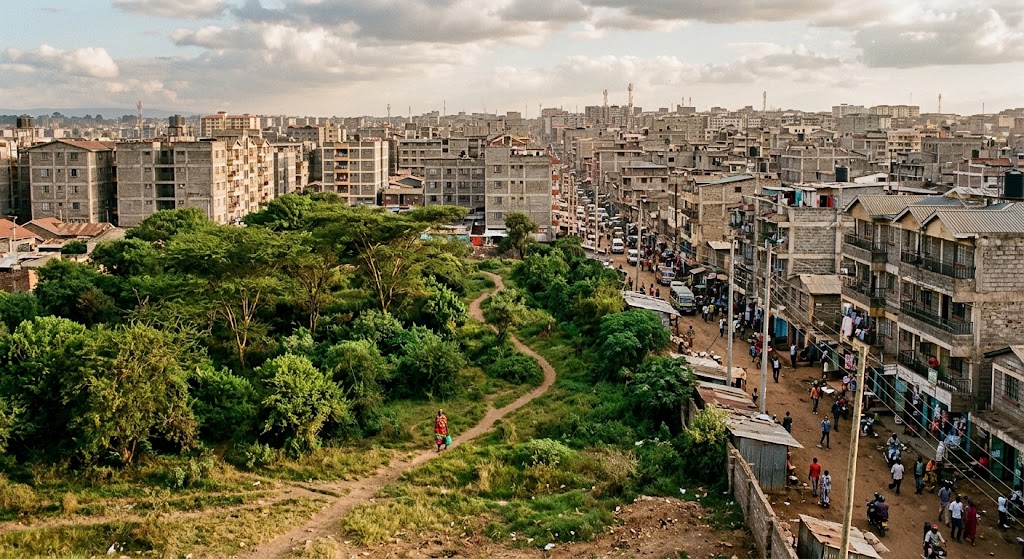
As Kenya’s towns expand and demand for housing increases, more land is being converted into residential developments, commercial buildings, roads and other infrastructure. While this expansion is necessary to accommodate a growing population, it raises an important question: are we building more houses at the expense of the open spaces that make neighbourhoods comfortable places to live?
Across Nairobi and its surrounding satellite towns, the pressure to maximise available land has made space an increasingly valuable resource. In some residential developments, gardens, playgrounds, tree-covered areas and communal recreation spaces receive less attention than the number of houses that can fit on a parcel of land.
The consequences may not be immediately obvious. However, if the disappearance of green spaces in Kenya continues, future generations could inherit residential neighbourhoods that are increasingly hot, congested, vulnerable to flooding and lacking places for recreation.
A good residential environment needs more than houses and access roads. It also needs room to breathe.
Why Green Spaces Matter in Residential Neighbourhoods
Green spaces include public parks, gardens, playgrounds, tree-lined walkways, landscaped communal areas and other places where vegetation forms part of the built environment.
These spaces serve purposes beyond beautification. Trees provide shade and help moderate local temperatures, while vegetation and permeable ground surfaces can help absorb rainwater and reduce surface runoff.
They also provide places where children can play, adults can exercise and neighbours can interact. For families living in residential estates in Nairobi, access to safe outdoor recreation can make a considerable difference to everyday life.
The World Health Organization identifies urban green spaces as important contributors to physical and mental wellbeing. They encourage physical activity, social interaction and psychological relaxation while helping reduce exposure to excessive heat, noise and air pollution.
Consequently, removing these spaces does not simply change the appearance of a neighbourhood. It can affect how residents experience their living environment.
What Happens If Green Spaces Continue Disappearing?

The long-term consequences could extend well beyond the loss of attractive gardens and playgrounds.
1. Residential Areas Become Hotter
Trees provide shade and help cool their surroundings through evapotranspiration. When vegetation is replaced by concrete, asphalt and closely packed buildings, surfaces absorb and retain more heat.
This contributes to the urban heat island effect, where built-up areas experience higher temperatures than surrounding greener locations.
In a city such as Nairobi, continued loss of vegetation could make densely developed neighbourhoods less comfortable, particularly during hot periods. Homes with limited shade and poor ventilation may become increasingly difficult to keep cool.
2. Increased Pressure on Urban Drainage Systems
Green spaces also play a role in managing rainwater. Vegetated ground allows some rainfall to infiltrate the soil rather than immediately flowing into roads and drainage channels.
When open ground is replaced by concrete driveways, parking areas, rooftops and paved compounds, more rainwater becomes surface runoff.
If drainage infrastructure is inadequate or poorly maintained, this can increase the risk of localised flooding, waterlogging and erosion.
For homeowners, this could mean damaged compounds, deteriorating access roads and additional property maintenance expenses.
3. Children Lose Important Recreation Spaces
Children need safe places to play, explore and interact outside their homes.
When residential developments prioritise buildings and parking spaces over playgrounds and open grounds, children may have fewer opportunities for outdoor recreation.
Families may consequently have to travel to public parks or commercial recreation facilities, adding time and transport expenses to ordinary family activities.
For parents purchasing houses for sale in Nairobi or Kiambu, the availability of accessible children’s play areas should therefore form part of the property evaluation process.
4. Neighbourhoods Lose Their Social Character
Open spaces provide natural meeting points where neighbours interact, children make friends and families participate in community activities.
Without these shared environments, residential areas can become collections of individual homes with limited opportunities for social interaction.
This can weaken neighbourhood identity and reduce the sense of community that makes planned residential developments attractive.
5. Property Environments Become Less Attractive
A house does not exist in isolation. Its surroundings influence the overall residential experience.
A neighbourhood with mature trees, accessible playgrounds, landscaped walkways and properly maintained communal spaces may offer a different living experience from one dominated by buildings and paved surfaces.
As buyers become more conscious of lifestyle, environmental quality and family recreation, the availability of green spaces could increasingly influence residential preferences and property desirability.
How Developed Countries Are Protecting Their Green Spaces
Countries that have experienced extensive urbanisation have increasingly recognised that green spaces must be incorporated into development planning rather than treated as leftover land.
Two examples offer useful lessons for Kenya.
Singapore: Building a City Around Greenery
Singapore has pursued a long-term approach to integrating nature into a densely developed urban environment.
Through its City in Nature strategy, the country protects nature reserves, develops public parks and connects green spaces through walking and cycling routes.
According to Singapore’s Urban Redevelopment Authority, approximately 7,800 hectares have been safeguarded for nature reserves, nature parks and other green spaces, including parks and park connectors. Its Park Connector Network has expanded to approximately 391 kilometres.
The approach demonstrates that housing and infrastructure expansion do not have to eliminate opportunities for residents to enjoy nature.
Rather than concentrating all recreation facilities in a few major parks, Singapore integrates green spaces into the wider urban environment.
United Kingdom: Making Green Spaces Accessible
The United Kingdom has also developed planning standards aimed at ensuring residents can access green spaces without travelling long distances.
In England, Natural England’s Accessible Greenspace Standards encourage access to different categories of green spaces within walking distance of homes.
The standards include a neighbourhood-level green space of at least 10 hectares within one kilometre, alongside smaller local and doorstep spaces.
The UK government’s 2026 green-space access statistics reported that 80% of households in England had access to at least one green or blue space within a 15-minute walk.
The important lesson is that green spaces should not simply exist somewhere in a city. They should be conveniently accessible to the people who need them.
Kenya Has Planning Guidelines, But Implementation Matters
Kenya is not without planning guidance on urban greenery.
The State Department for Lands’ Physical and Land Use Planning Handbook, published in December 2025, sets out guidance on the distribution and planning of green spaces.
Among its benchmarks, it identifies 0.15 hectares for local centres and neighbourhoods, two hectares for towns and five hectares for municipalities. It also provides for larger distributed green spaces in cities.
The handbook emphasises accessibility, children’s playgrounds, walking and cycling connections, tree planting and facilities for people living with disabilities.
Furthermore, the Physical and Land Use Planning Act, 2019, identifies environmental protection, public health, safety and orderly development among the objectives of development control.
These provisions demonstrate that green spaces are recognised within Kenya’s planning framework. The challenge is ensuring that planning standards translate into properly protected, accessible and maintained spaces as towns expand.
What Should Modern Residential Developments Do Differently?
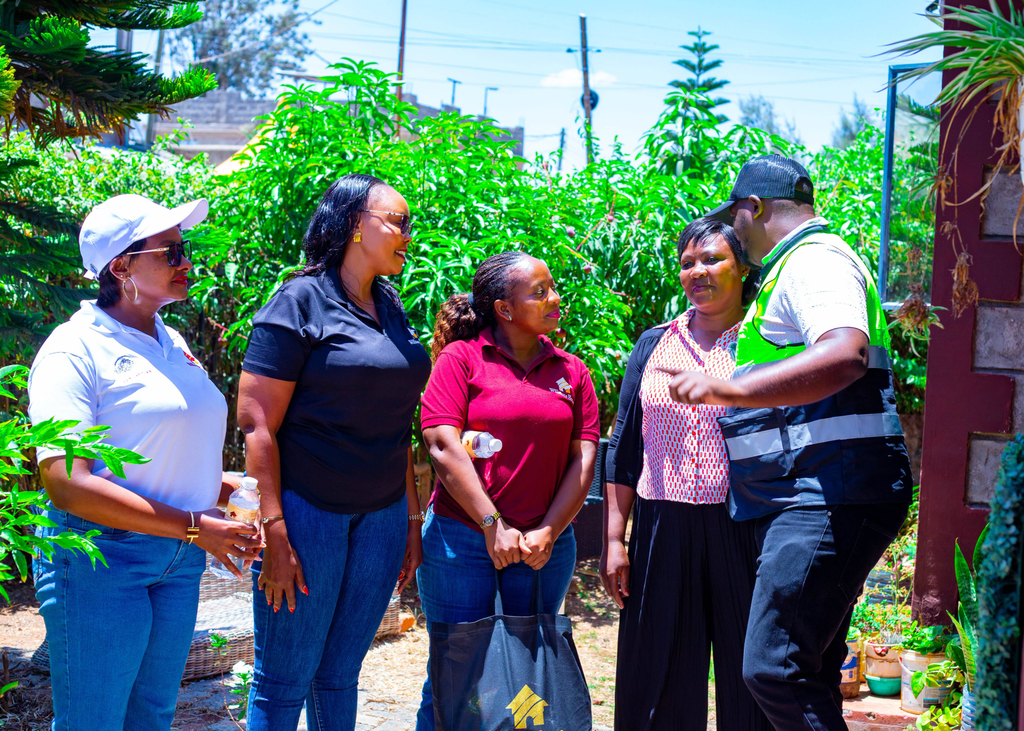
For property developers in Kenya, the conversation should move beyond the number of houses that can fit on a particular parcel of land.
Well-planned residential developments should consider:
- Dedicated green spaces: Reserve identifiable areas for gardens, trees and communal recreation rather than treating them as unused land.
- Children’s playgrounds: Provide safe, accessible play areas that accommodate families.
- Tree planting: Incorporate suitable indigenous and climate-adapted trees into landscaping plans.
- Sustainable drainage: Preserve permeable surfaces and incorporate appropriate rainwater management measures.
- Walkable environments: Connect communal spaces through safe pedestrian paths and accessible walkways.
- Long-term maintenance: Establish clear arrangements for maintaining shared gardens, trees and recreational facilities.
For buyers looking at gated communities in Kenya, these features deserve attention alongside house designs, security, location and access roads.
The Future of Homeownership Must Include Room for Nature
Kenya’s housing demand is real, and the country must continue expanding its residential supply. However, increasing the number of houses should not mean progressively eliminating the spaces that support healthy and comfortable living.
The experiences of Singapore and the United Kingdom demonstrate that green spaces can form an integral part of modern urban planning, even in densely populated environments.
For Nairobi, Kiambu, Ruiru, Juja and other growing residential centres, the opportunity is to embrace development that accommodates both housing and the natural environment.
Ultimately, a good neighbourhood should offer more than a roof over someone’s head. It should provide an environment where children can play, families can enjoy outdoor activities, neighbours can interact and residents can live comfortably.
The homes we build today will shape the neighbourhoods future generations inherit. We must ensure that those neighbourhoods have enough room to breathe.