

Africa’s real estate sector is experiencing unprecedented growth, driven by rapid urbanization, strong economic fundamentals, and rising population density. As of 2025, the African real estate market is valued at $233.5 billion, with projections reaching $244 billion in 2026 and potentially $347 billion by 2034, reflecting a steady CAGR of 4.5%.
For investors and homebuyers in Kenya, this translates into a thriving Nairobi real estate market and a wealth of property investment opportunities Kenya.
Urbanization Driving Property Demand

Sub-Saharan Africa’s population is expected to grow by over 400 million by 2030, with urban centers like Nairobi absorbing a significant share. This urban influx is fueling demand for:
- Residential properties, including affordable houses in Nairobi
- Office and commercial spaces
- Retail centers and logistics infrastructure
In Kenya, satellite towns around Nairobi, such as Ruiru, Kitengela, Syokimau, and Ngong, are seeing rapid development to meet housing demand, especially for houses for sale in Nairobi and residential plots in Nairobi.
Read Also: Kenya’s Property Market Enters a Cautious Phase Ahead of the 2027 General Election
Market Segmentation: Residential Property Dominates
Residential real estate accounts for 58.7% of Africa’s market in 2025, making it the backbone of property investment. Within this segment, there is strong differentiation between:
- Luxury homes in Kenya targeting high-income earners and diaspora investors
- Affordable housing developments for middle-income buyers
African Real Estate Market Share by Segment (2025)
| Segment | Market Share | Growth Trend |
|---|---|---|
| Residential Property | 58.7% | Strong demand for affordable housing |
| Commercial Property | 24% | Rapid growth driven by urban business expansion |
| Industrial & Logistics | 10% | E-commerce and manufacturing fueling demand |
| Hospitality & Mixed-Use | 7.3% | Tourism recovery and urban lifestyle trends |
The Kenyan government’s Affordable Housing Programme (AHP) has accelerated affordable housing development, creating both social impact and investment returns.
Nairobi: East Africa’s Real Estate Hub
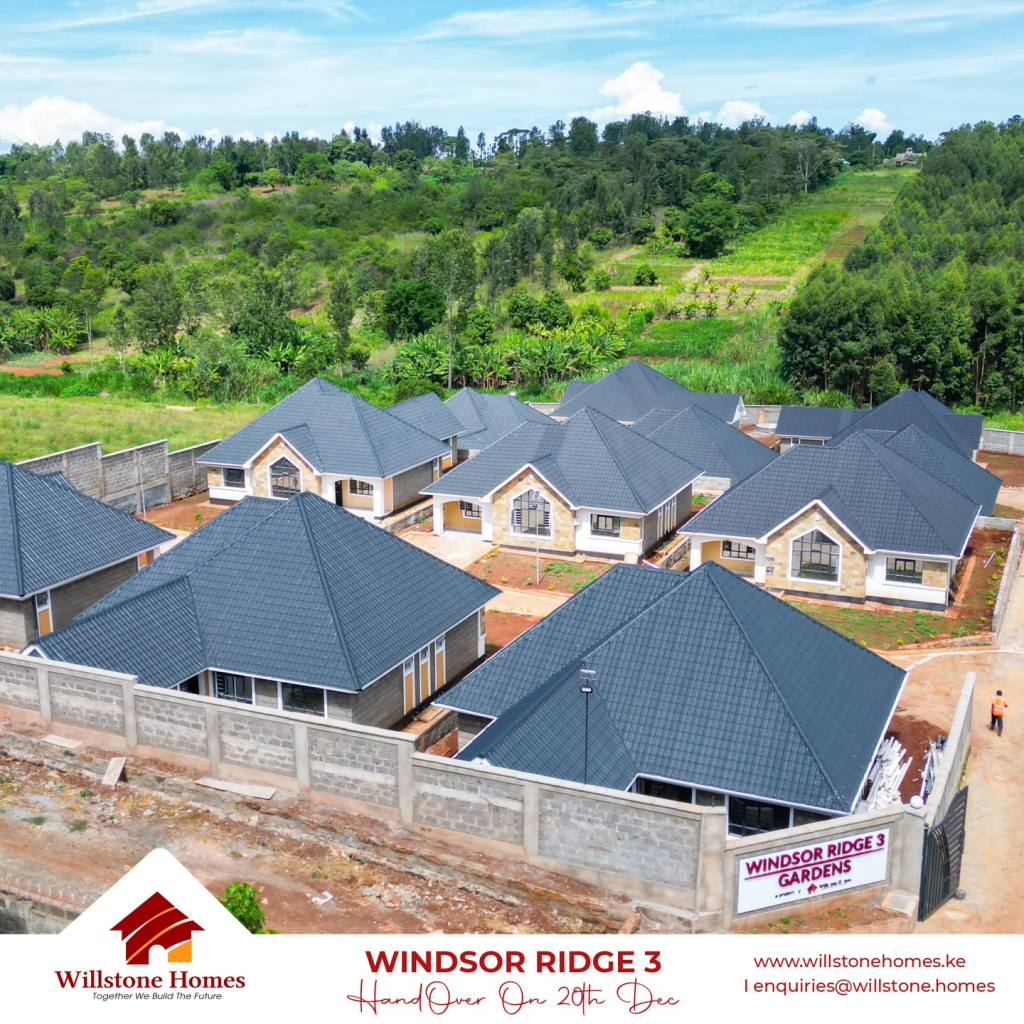
Nairobi is East Africa’s leading real estate market, attracting both local investors and Kenyans in diaspora looking to buy property in Kenya from abroad. Key growth drivers include:
- GDP growth projected at 5% annually through 2026
- Expansion of real estate developers in Kenya in both residential and commercial segments
- Strong demand for property in Nairobi Kenya and surrounding satellite towns
Retail and office development continues to expand, with Nairobi’s retail space projected to reach 8.8 million square feet in 2025, fueled by mixed-use developments and modern shopping centers like Two Rivers Mall and Garden City.
Commercial and Industrial Real Estate
While residential property dominates in size, commercial real estate is growing at a faster pace, with a projected CAGR of 8.1% through 2034. This growth is supported by:
- Increasing demand for office space and logistics hubs
- Rising consumer spending
- Expansion of multinational operations in Nairobi
Prime locations like Westlands, Upper Hill, Kilimani, and Karen command premium valuations, while secondary commercial areas offer higher returns for sophisticated property investment Kenya.
Interest Rates and Mortgage Accessibility
After a slowdown between 2022–2023, macroeconomic conditions in Kenya improved in 2024–2025, creating a favorable environment for property buyers and investors. Key trends:
- Lower interest rates increase affordability for mortgages
- Middle-income homebuyers can access affordable houses in Nairobi
- Property investment remains attractive compared to low-yield savings and bonds
Infrastructure and Property Quality

Investors and buyers now prioritize properties in well-serviced locations, with reliable:
- Power and water supply
- Security systems
- Transport connectivity
In Nairobi, areas along the Nairobi Expressway, Thika Superhighway, and Standard Gauge Railway corridor are seeing faster property appreciation, reflecting the value of land for sale in Nairobi and residential plots in Nairobi with infrastructure access.
Foreign Investment Trends
International investors are returning to African real estate, bringing:
- Capital for large-scale projects
- Global design and management standards
- Expertise in sustainable construction
This resurgence supports property investment opportunities Kenya, especially in commercial developments and high-quality residential estates.
Sustainability in Real Estate
Green building and sustainable development are increasingly important. Benefits include:
- Reduced operating costs
- Energy-efficient construction
- Higher valuations and rental rates
Developers integrating sustainability are enhancing the long-term value of property in Nairobi Kenya.
Challenges Facing the Sector
Despite strong growth, challenges remain:
- Limited infrastructure in some regions
- High construction costs
- Regulatory complexity in land ownership
- Concentration of investment in major cities
Read Also: Global Mortgage Demand Surges: What It Means for Kenya’s Real Estate Market
Outlook: Opportunities for Investors and Homebuyers

The African real estate market, particularly property in Nairobi Kenya, is poised for steady growth. Key opportunities:
- Affordable residential housing for growing urban populations
- Commercial and industrial developments supporting e-commerce and business growth
- Diaspora property investment leveraging government incentives
Takeaway
The African real estate sector is on a recovery and growth trajectory. Nairobi, as East Africa’s property hub, offers unparalleled property investment opportunities Kenya, ranging from affordable houses in Nairobi to luxury estates and residential plots in Nairobi. For investors, developers, and homebuyers, the timing has never been better to enter the market.