
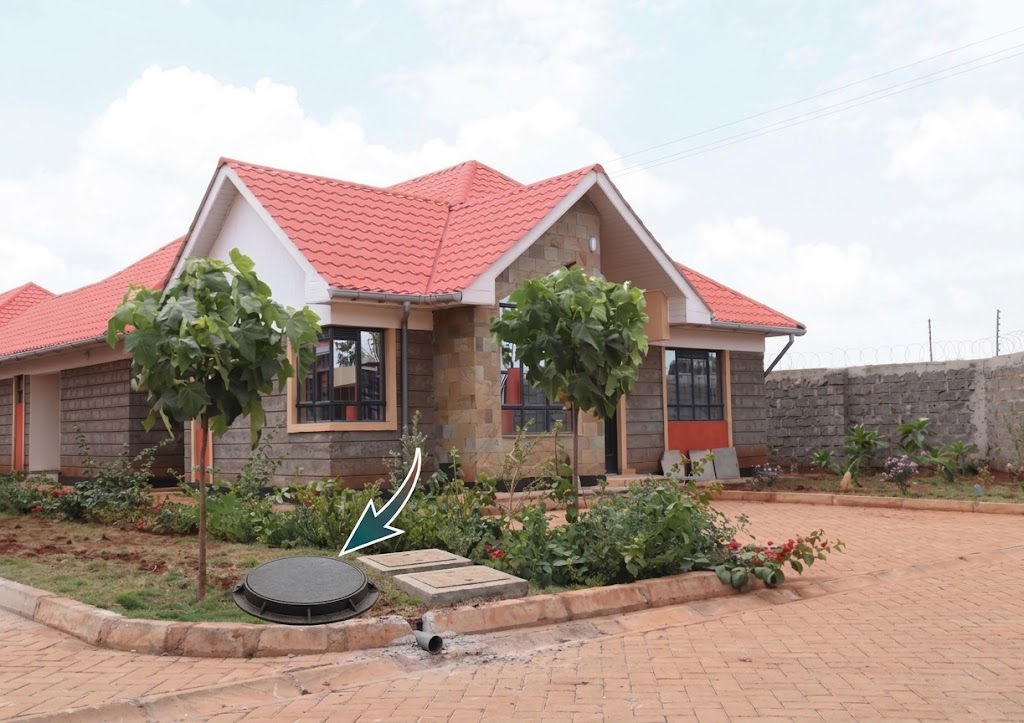
For most of the year, the system works quietly. Then the long or short rains arrive, toilets drain slowly, there’s a smell in the compound, and a tank emptied two months ago is suddenly full again.
If you own a home in Nairobi or Kiambu County, or you’re thinking of buying land near Nairobi, this is worth understanding. Wet weather changes what’s happening underground, and a septic system depends heavily on the soil around it. It’s also one of the most overlooked checks when people compare plots for sale in Ruiru, Juja or Kiambu Town.
How a septic system is meant to work
Most homes on plots outside the sewer network have two parts:
- The septic tank, a sealed chamber where solids settle out.
- The soak pit (or drain field), where the liquid leaves the tank and soaks into the soil.
The tank only stays at a normal level if liquid can leave it. In the rainy season, that exit is often the first thing to fail.
Read Also: Why Your Sale Agreement Should Say What Happens If the Seller Dies
Why the tank fills faster when it rains

1. The soak pit can’t absorb anything
When soil around the soak pit is already saturated, there’s no room for effluent to soak away. Liquid backs up into the tank, which fills and can overflow or push sewage toward the house. This is widely described as the most common cause of rain-related septic backups.
2. Groundwater or surface water gets into the tank
When the water table rises, water can enter through cracked lids, unsealed manholes, damaged joints or hairline cracks in the tank walls. That clean water uses up capacity meant for household waste, so the tank fills even if nobody is using more water at home.
3. Rainwater is piped in where it shouldn’t be
Roof gutters, downpipes or yard drains that discharge near the tank or soak pit can add thousands of litres during a storm. If the level jumps during rain, check where your roof water goes.
4. Your soil drains slowly
Clay-heavy ground absorbs water slowly, and in the rains it can be close to sealed. Black cotton soil is reported in parts of Nairobi’s eastern side and around some areas of Ruiru, while other parts of Kiambu are known for porous red soil that often suits a standard soak pit. Soil varies even within the same estate, so don’t assume. Black cotton soil can also crack concrete tanks as it swells and shrinks.
5. The system was undersized or neglected
A tank overdue for emptying has less working space, so it backs up sooner. Contractors also report that “quick build” soak pits are often undersized and start failing within a few years. One common design guide uses about 150 litres per person per day.
Read Also: Kenya’s Slowing Land Market: What Buyers Should Know Before Investing in Property
Is it rain getting in, or waste that can’t get out?

| What you notice | Likely cause |
|---|---|
| Tank fills during or right after heavy rain, then slowly drops | Saturated soil or temporary inflow |
| Tank fills again within days of being emptied | The soak pit or drain field isn’t draining |
| Water level high even though the house uses little water | Groundwater or rainwater entering the tank |
| Wet, smelly patch over the soak pit | Soak pit overloaded or failing |
| Happens every rainy season, neighbours too | High water table or poor soil in your area |
If emptying only helps for a few days, the tank isn’t the real problem. The ground it drains into is.
What not to do
- Don’t keep paying for emptying without finding the cause. An exhauster typically costs around KSh 5,000-15,000 per trip, and more in emergencies.
- Be careful about pumping when the ground is saturated. Guidance on flooded systems warns that pumping can damage or even float a tank. Ask a qualified contractor first.
- Never open or lean into a tank. Septic tanks contain gases that can be dangerous.
What actually helps
Quick wins:
- Redirect roof gutters, downpipes and yard drainage away from the tank and soak pit.
- Check and seal lids and manholes, and keep covers above ground level.
- Grade the surrounding ground so water runs away from the system.
- Spread laundry across the week during heavy rain.
Longer-term fixes:
- Get a soil percolation test and have a qualified engineer assess the soak pit.
- Enlarge or add a second soak pit, ideally on higher, better-draining ground.
- Repair tank cracks and joints so groundwater can’t leak in.
- In black cotton or high-water-table areas, discuss a reinforced and waterproofed tank, an elevated soak pit, a drainage field or a biodigester.
- Empty the tank on a sensible schedule instead of waiting for an overflow.
What it may cost: A new septic tank installation in Kenya is commonly quoted at about KSh 80,000-350,000, depending on size, material and soil. A concrete biodigester starts at about KSh 120,000 and can pass KSh 200,000. Treat these as ballparks and get several quotes.
Buying a plot or house in Nairobi or Kiambu? Check drainage first

A listing may promise a ready title deed and a good location, but the buyer’s checklist often stops at paperwork. Before you pay a deposit on land for sale in Kiambu, a 50×100 plot or a house in a gated community, ask these questions:
- Is there a sewer connection, or does the home rely on a septic tank and soak pit? Some estates advertise sewer lines, but many plots depend on septic systems.
- What soil is the plot on? Sellers often advertise red or murram soil. Ask whether any soil test or percolation test has been done.
- How often is the tank emptied, and does that change in the rainy season?
- Have there been overflows or smells during past rains? Ask neighbours.
- Where does roof and yard water go?
- Can you see the tank and soak pit? Look for sealed, raised lids and wet patches.
- Does the plot sit low, near a river or on a slope? Low ground tends to hold water longer.
- Visit in the rainy season if you can. A plot that looks perfect in January may behave very differently in April.
If you’re comparing houses for sale in Nairobi or a maisonette in Kiambu, apply the same checks to the compound’s drainage, not just the interior finishes.
Read Also: The Deposit You Can’t Get Back? What Happens to Your Money When a Land Deal Collapses
Septic tank or sewer connection?
A sewer connection removes the soak pit problem, but availability depends on the estate and local infrastructure, and connection costs and timelines vary. If a seller says sewer is “available,” ask where the nearest connection point is, who pays for the link and whether it’s already operating.
[Browse plots for sale in Ruiru] · [Browse land for sale in Kiambu] · [Book a site visit]
Frequently asked questions
Why does my septic tank fill up when it rains?
Usually because wet ground can’t absorb the liquid leaving the tank, or because groundwater and rainwater are entering the system, or both.
Is it safe to empty a septic tank during heavy rain?
Be cautious. Pumping when surrounding ground is saturated can damage or lift a tank. Ask a qualified contractor to advise.
How often should I empty my septic tank?
It depends on tank size, household size and use. Ask your contractor for a schedule rather than waiting for an overflow.
Does black cotton soil cause septic problems in Nairobi and Kiambu?
It can. Clay soils drain slowly, and expansive black cotton soil can crack tanks. Such sites often need a reinforced tank, a bigger or elevated soak pit, or an alternative design.
How much does an exhauster cost in Kenya?
Commonly around KSh 5,000-15,000 per trip, varying by location, tank size and urgency.
What should I check about drainage before buying a plot in Ruiru, Juja or Kiambu?
Soil type, whether the estate has sewer access, how past rainy seasons affected neighbours, where stormwater flows and whether a percolation test has been done.
Does a ready title deed mean the plot has no drainage problems?
No. Title and drainage are separate. A title deed proves ownership, not how well the ground handles water.
This article is general information, not engineering advice. A site assessment is essential for any specific system.
Read Also: Mashujaa Day: Why Today’s Visionaries Are Kenya’s Modern Mashujaa