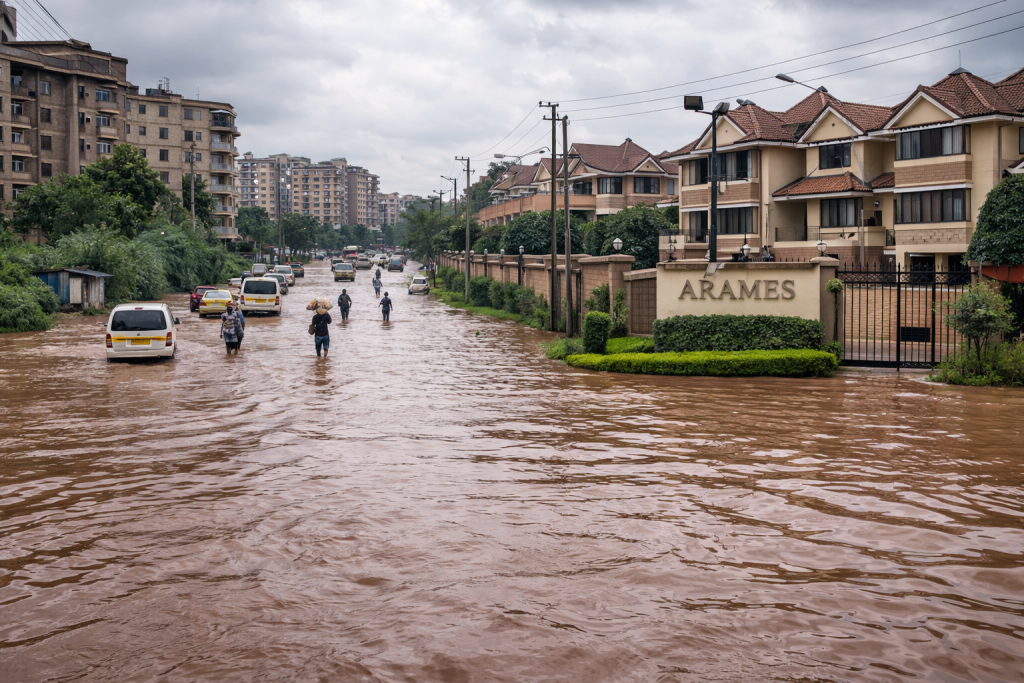
Nairobi’s drainage problem is no longer just an inconvenience during the rainy season—it is now a major factor shaping real estate value, land investment decisions, and urban development patterns across the city.
As floods become more frequent and infrastructure struggles to keep up, property buyers are starting to ask deeper questions: Is this area safe? Will it flood? Is this land properly planned?
These questions are quietly reshaping Kenya’s property market.
Nairobi’s Drainage Problem: A City Growing Faster Than Its Systems
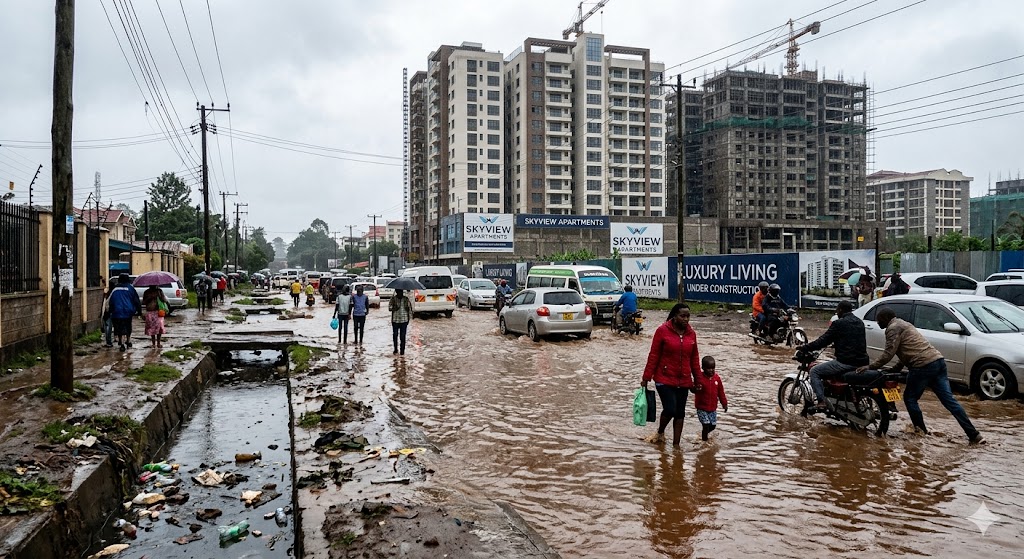
Nairobi’s drainage system was built for a much smaller city. Today, rapid urban growth, unplanned settlements, and increased rainfall intensity have pushed it beyond capacity.
The result is familiar:
- Flooded roads during heavy rains
- Blocked drainage caused by waste and sediment
- Overflowing rivers in densely populated areas
- Transport disruption and property damage
This is not just an infrastructure issue—it is now a real estate risk factor.
What It Would Take to Fix Nairobi’s Drainage System
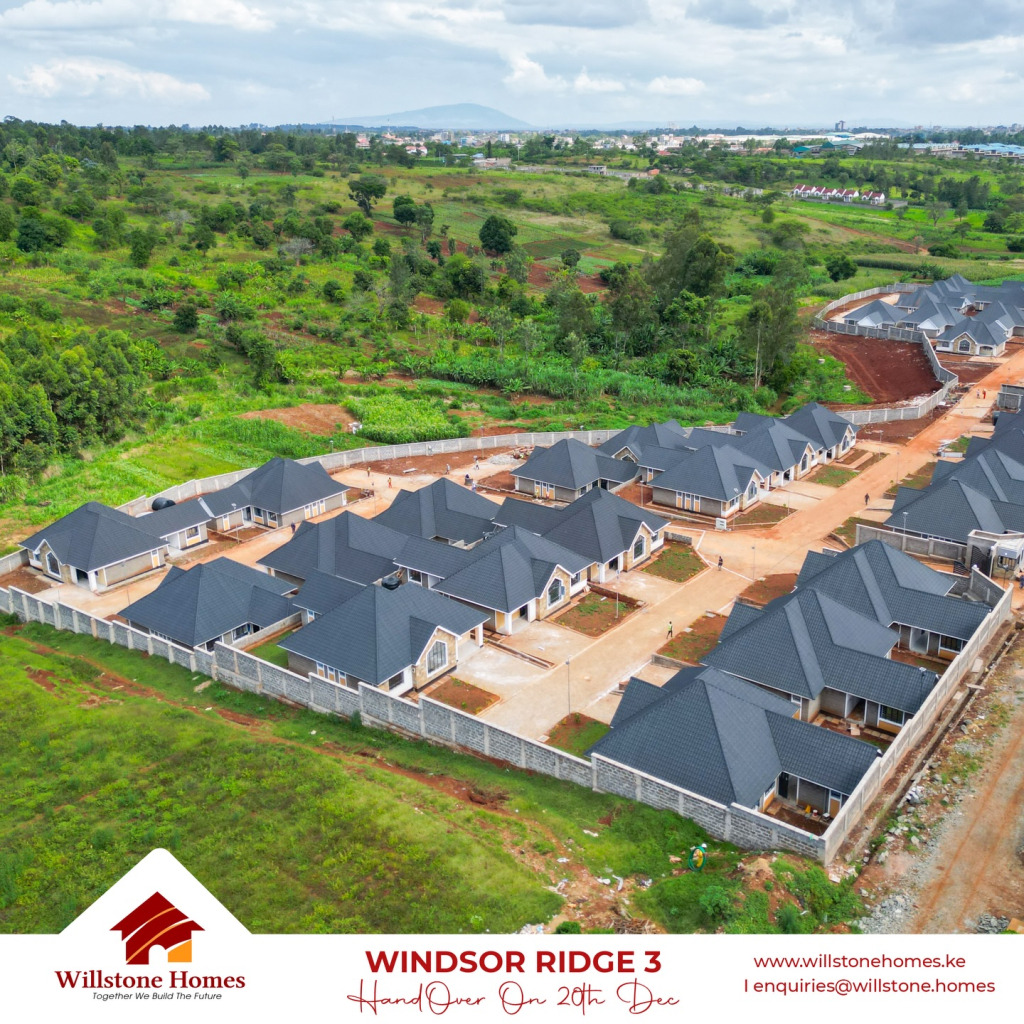
Solving Nairobi’s drainage crisis requires more than cleaning blocked gutters. It demands a full urban systems upgrade.
At Willstone Homes, we view this challenge as part of a broader shift toward climate-resilient urban development in Kenya.
1. Upgrading Drainage Infrastructure
A modern system would require layered engineering—surface, underground, and environmental integration.
| Level | Solution | Purpose |
|---|---|---|
| Surface | Road drainage channels & culverts | Quick water removal |
| Underground | Stormwater pipes & tunnels | High-capacity flow control |
| Natural systems | Wetlands & permeable surfaces | Water absorption & regulation |
This integrated approach ensures resilience during extreme rainfall events.
2. Strong Urban Planning and Enforcement
No drainage system can succeed without proper land use control.
Key actions include:
- Protecting riparian land from encroachment
- Enforcing zoning regulations consistently
- Preventing unplanned settlements in flood zones
- Digitizing land records to improve accountability
Without this, infrastructure improvements remain temporary.
3. Waste Management Reform
A significant percentage of flooding in Nairobi is caused by blocked drainage systems filled with plastic waste and debris.
A sustainable solution requires:
- Reliable waste collection systems
- Recycling and disposal enforcement
- Public awareness and behavioural change
Read Also:Gated Communities Near Nairobi: Why Kiambu’s Mangu Area Is the New Real Estate Hotspot
Why Fixing Nairobi’s Drainage Is So Difficult
Despite clear solutions, implementation faces serious real-world challenges.
One of the biggest issues is informal settlement pressure. Many communities live in areas that would normally be designated for drainage corridors or flood plains. Relocation is both socially and politically sensitive.
Another challenge is governance inconsistency. Even with existing laws, enforcement is uneven, especially in fast-growing peri-urban areas.
Funding is also a major constraint. Drainage systems compete with housing, healthcare, and transport for national and county budgets.
Finally, climate change is increasing rainfall unpredictability, meaning the system must be designed for extremes—not averages.
Impact on Nairobi Real Estate and Housing Investment
Drainage and infrastructure improvements are now directly influencing how property value is created in Kenya.
At Willstone Homes, we see this shift as part of the evolution toward smart, risk-aware real estate investment.
1. Property Value Realignment Across Nairobi
Areas with poor drainage or flood risk are beginning to show slower appreciation compared to well-planned estates.
Over time, the market is expected to separate into:
- High-risk zones (flood-prone, informal planning)
- Low-risk zones (planned, well-serviced estates)
This will redefine property pricing across Nairobi.
2. Rise of Climate-Resilient Housing
Developers are increasingly expected to integrate flood-resistant features into design, including:
- Elevated foundations
- Proper estate drainage systems
- Improved stormwater channels
- Environmental landscaping
These features are no longer luxury additions—they are becoming standard expectations.
3. Increased Buyer Due Diligence
Modern buyers are now more cautious than ever. Before purchasing property, they increasingly ask:
- Does this area flood during rainy seasons?
- Is the land near a riparian reserve?
- What drainage infrastructure supports this estate?
This shift is reducing speculation and increasing demand for verified developments.
Short-Term Disruption vs Long-Term Opportunity

Any large-scale drainage reform in Nairobi will come with short-term disruption. Demolitions, construction works, and stricter enforcement may temporarily slow parts of the property market.
However, the long-term benefits are significant.
| Phase | Market Impact |
|---|---|
| Short-term | Project delays, regulatory tightening, uncertainty |
| Long-term | Stable property values, safer developments, investor confidence |
The long-term direction is clear: a safer and more structured real estate market in Kenya.
Why This Matters for Buyers and Investors
For investors and homebuyers, this shift means one thing: infrastructure is now just as important as location.
At Willstone Homes, we focus on delivering:
- Well-planned residential communities
- Proper drainage and infrastructure integration
- Affordable, quality housing for Kenyan families and diaspora buyers
- Long-term value through structured development
As Nairobi evolves, properties built on strong planning and infrastructure will consistently outperform speculative developments.
Read Also:The Ultimate Checklist for Verifying Serviced Land Plots in Kenya Before Title Deed Transfer
Final Thought
Nairobi’s drainage crisis is not just an environmental issue—it is a defining factor in the future of real estate in Kenya.
The market is moving toward a new standard where:
- Safety matters as much as price
- Infrastructure matters as much as location
- Planning matters as much as demand
For investors, this is a turning point. For developers, it is a responsibility. For buyers, it is a warning—and an opportunity.