

For many years, the traditional Kenyan home was designed around familiar priorities: bedrooms, a living room, a kitchen, bathrooms and perhaps a small outdoor space. The assumption was that most adults would leave home to work, while children would attend school and return in the evening. However, changing employment arrangements and the growth of digital businesses are gradually challenging this traditional understanding of residential space.
Remote and hybrid working have introduced a new consideration into homeownership. A growing number of professionals, entrepreneurs, consultants, freelancers and digital workers need somewhere to work without necessarily leaving their homes. Consequently, homes for sale in Kenya are increasingly being evaluated not only by their location, size and architectural appearance but also by how effectively they accommodate work, learning and family life.
This shift presents an interesting challenge for property developers. A house must provide somewhere to relax, entertain guests and raise a family, but it may also need to function as a productive working environment.
The Home Office Is Becoming an Important Residential Feature
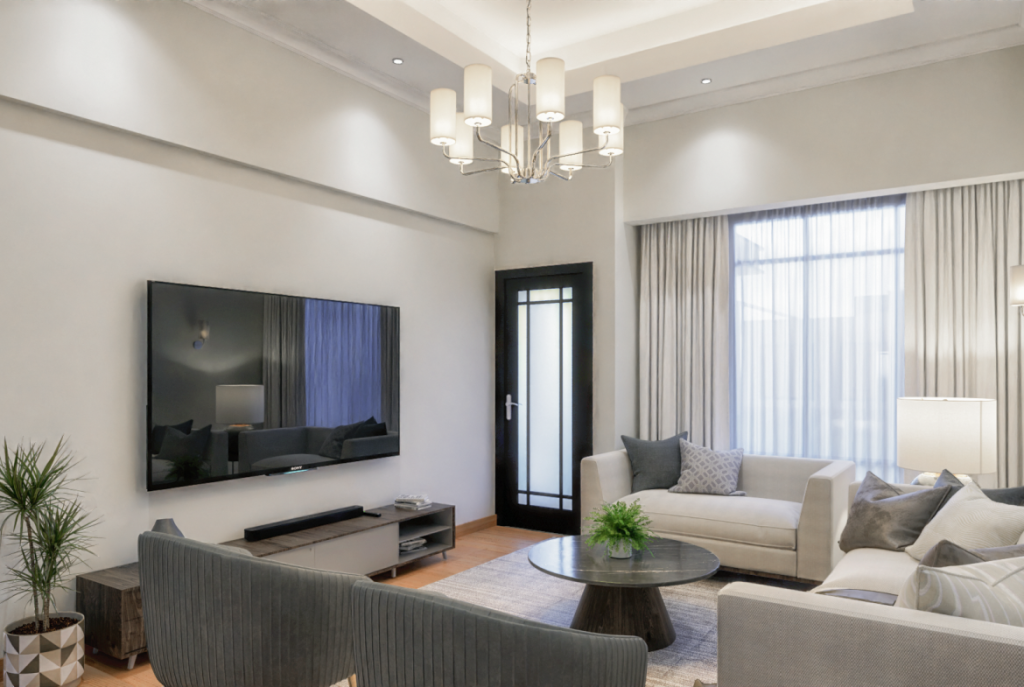
A dedicated home office was once viewed as an additional luxury, particularly in ordinary middle-income residential developments. Today, it is an increasingly relevant consideration for buyers whose professional responsibilities do not always require physical attendance at an office.
Consider a Nairobi professional who works for a company in Westlands but only needs to report to the office twice a week. On other days, the individual may attend virtual meetings, prepare reports, communicate with colleagues and complete assignments from home.
Working from the dining table or bedroom may initially appear convenient. However, these arrangements can become uncomfortable when work occupies several hours each day.
A dedicated workspace provides separation between professional responsibilities and household activities. It also offers somewhere to keep documents, computers and other equipment without allowing work to take over shared family spaces.
For house buyers in Nairobi and Kiambu, an additional room that can function as a study or office could therefore become an important consideration when comparing different house designs.
Read Also: Why Ventilation Matters When Buying Property in Kenya
Internet Connectivity Is Becoming a Residential Necessity
A beautiful home with unreliable internet connectivity can present serious challenges to someone who depends on digital services for income.
Kenya’s expanding digital infrastructure has made online work, digital entrepreneurship, virtual meetings and internet-based services increasingly accessible. According to the Communications Authority of Kenya, fixed internet subscriptions increased substantially over recent years, with fibre-optic subscriptions reaching approximately 2.14 million by June 2025.
This growth reflects the expanding importance of fixed broadband infrastructure in homes and businesses. However, internet availability varies between neighbourhoods and individual developments.
For prospective homeowners, checking internet connectivity should become part of the property inspection process.
Important questions include:
- Are fibre internet service providers already operating in the neighbourhood?
- Are individual houses ready for fibre installation?
- Is there reliable mobile network coverage as an alternative?
- Are there provisions for installing routers and distributing internet connections throughout the house?
- Can the household maintain connectivity during ordinary service interruptions?
For developers, providing suitable conduits, cable entry points and convenient router locations during construction can make future installations easier.
Noise Control and Privacy Matter More Than Ever

One of the overlooked challenges of working from home is noise.
A household may have several people carrying out different activities simultaneously. One person could be attending a virtual meeting, another watching television, while children play in the living room.
Without proper spatial planning, these activities can interfere with concentration and professional communication.
This makes room placement, internal doors, wall construction and acoustic considerations important aspects of modern house designs in Kenya.
A workspace located away from the television area, kitchen and main entrance may offer better privacy. Bedrooms should also be positioned in a way that limits unnecessary disturbance, particularly where one household member works late or attends meetings across different time zones.
For buyers who cannot afford an additional room, a flexible layout with a quiet study corner may provide a practical alternative.
The objective is not necessarily to create a corporate office inside every house. It is to provide enough separation for people to work without disrupting the rest of the household.
Flexible Rooms: Making Every Square Metre Work
Not every Kenyan family can afford a large house with an additional room reserved exclusively for office use. This is where flexible residential design becomes particularly important.
A spare bedroom could double as a home office. A study area could accommodate children’s homework during the evening and professional assignments during the day.
Architects can also incorporate adaptable spaces into house layouts without significantly increasing the overall footprint.
For example, a small room with sufficient natural light, electrical sockets and appropriate ventilation could serve several purposes depending on the household’s needs.
This flexibility is particularly relevant for affordable houses in Kenya, where buyers must balance available space against purchase prices and construction costs.
Rather than concentrating exclusively on the number of rooms, prospective homeowners should consider whether those rooms can accommodate changing household requirements.
Natural Lighting and Ventilation Improve the Working Environment
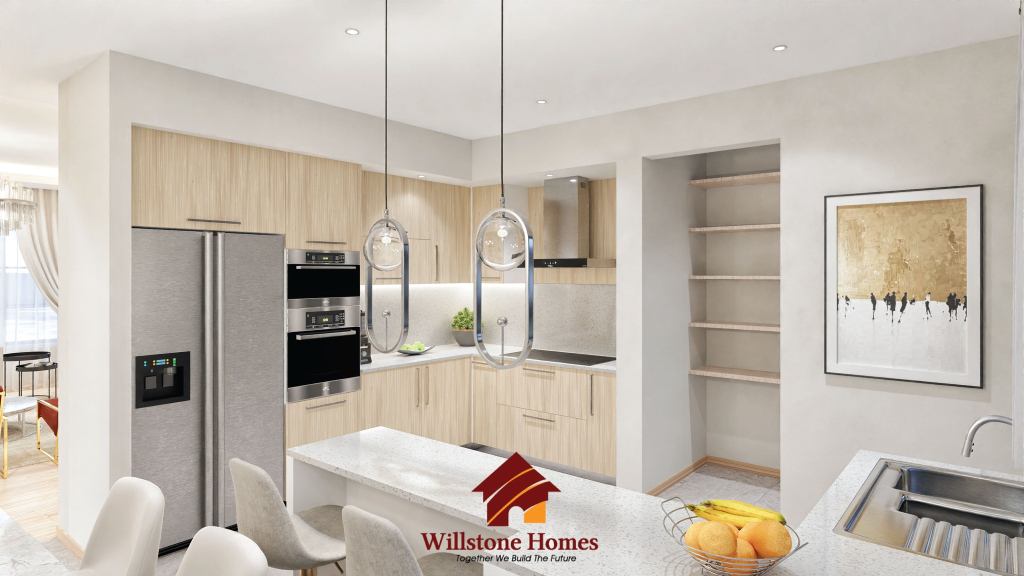
Working indoors for extended periods makes natural lighting and ventilation particularly important.
A workspace with inadequate lighting may require artificial illumination throughout the day. Poor ventilation can also make a room uncomfortable, especially when several electronic devices are operating.
Modern residential architecture should therefore consider window placement, natural light, cross-ventilation and the orientation of working spaces.
Where possible, a home office should have access to daylight without creating excessive glare on computer screens.
These considerations benefit the entire household, not just people working remotely. Children studying at home and adults engaging in other indoor activities also benefit from comfortable, well-ventilated rooms.
Location Still Matters: Remote Work Does Not Eliminate the Need for Accessibility
One assumption associated with working remotely is that professionals can move anywhere because they no longer need to commute every morning.
In reality, many people work under hybrid arrangements and must still report to physical offices occasionally. Others need regular access to clients, suppliers, schools, hospitals and commercial facilities.
This makes location an important consideration even when purchasing a house with a dedicated office.
For buyers exploring houses for sale in Kiambu, Ruiru, Juja and other Nairobi satellite towns, access roads, public transport connections and proximity to essential services should remain part of the decision.
A spacious house in a distant location may offer an attractive working environment, but the convenience of travelling to Nairobi when required should not be overlooked.
Read Also: Disappearing Green Spaces in Kenya: Why Modern Residential Areas Need Room to Breathe
What Should Property Developers Consider?
The changing relationship between work and residential life presents an opportunity for property developers in Kenya to rethink some traditional house designs.
Future-oriented residential developments should consider practical features that accommodate different household and professional needs.
| Residential feature | Why it matters |
|---|---|
| Dedicated study or office room | Provides privacy and separation from family activities |
| Fibre-ready infrastructure | Makes reliable internet installation easier |
| Adequate electrical outlets | Supports computers, monitors and other equipment |
| Natural lighting | Creates a more comfortable indoor working environment |
| Good ventilation | Improves comfort during extended working hours |
| Noise-conscious layouts | Reduces interruptions during virtual meetings |
| Flexible rooms | Allows households to adapt spaces as needs change |
| Backup power provisions | Helps households manage electricity interruptions |
These features do not necessarily require expensive architectural changes. Many can be incorporated during the initial planning and construction stages, making them easier and potentially less costly to implement.
The Future Kenyan Home Will Need to Accommodate More Than Family Life

The traditional separation between residential and professional environments is becoming less rigid. While not every Kenyan works remotely, the growth of digital businesses, online services and hybrid employment arrangements has introduced new expectations into residential design.
A home must increasingly accommodate different activities without compromising the comfort of its occupants.
For a young professional, this could mean having a quiet room for virtual meetings. For a family, it might involve providing a study area where children can complete school assignments while parents attend to professional responsibilities.
At Willstone Homes, the focus on planned residential developments and practical homeownership reflects an important consideration: a good house should serve the needs of its occupants beyond the day they receive their keys.
As buyers evaluate homes for sale in Nairobi and Kiambu, the availability of functional workspaces, reliable connectivity and adaptable room arrangements deserves greater attention.
Ultimately, the home of the future will not simply be a place where people return after work. For an increasing number of households, it will also be where work happens, businesses operate, ideas develop and careers progress.
The best residential designs will be those that allow people to work productively without sacrificing the comfort and privacy
Research Sources
- Knight Frank Kenya Buyer Survey – Its 2020 survey found that 85% of surveyed respondents considered a home office more important following the pandemic. This is historical survey evidence, not a 2026 national buyer statistic.
- KCB: The Future of Homeownership in Kenya – Discusses changing residential design preferences, privacy and flexible living spaces.
- Kenya National Broadband Strategy 2025–2030 – Documents the expansion of broadband infrastructure, including fixed internet subscriptions increasing from 609,611 in June 2020 to 2,144,713 in June 2025.
- JKUAT: Evolving Homes in an Evolving World – Research examining the relationship between residential design and work-from-home requirements.
- Mjengo Hub: Pandemic Sparks Major Shift in How Kenyans Choose Homes – Discusses the changing expectations of Kenyan homebuyers.