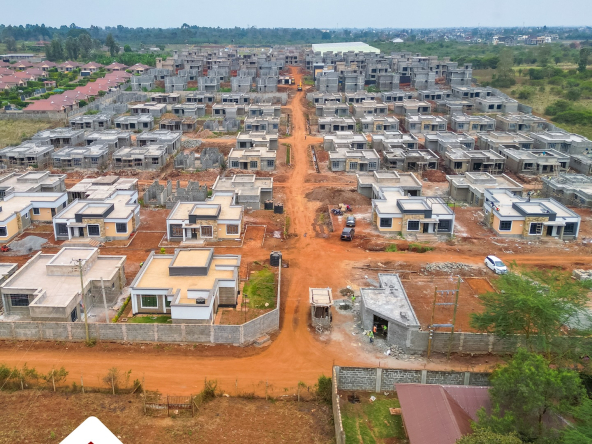

Real estate has long been considered one of the most reliable paths to wealth in Kenya. But as property prices in Nairobi and its satellite towns continue to rise, owning physical property is no longer the only way to participate in the market. Real Estate Investment Trusts (REITs) are emerging as a practical alternative, allowing investors to benefit from property without the heavy capital requirements or management responsibilities.
This guide explains what REITs are, how they operate in Kenya, and how you can start investing using real, current market structures.
What Are REITs?

A Real Estate Investment Trust (REIT) is a professionally managed investment vehicle that pools money from multiple investors to acquire or develop income-generating real estate. Instead of purchasing land or buildings directly, investors buy units or shares in the REIT and earn returns from rental income or property appreciation.
In Kenya, REITs are traded through the Nairobi Securities Exchange, placing them within the same asset class as stocks. This means they are relatively liquid compared to traditional property, as investors can buy or sell their holdings more easily than selling a house or plot of land.
How REITs Work in Kenya
REITs in Kenya operate under the oversight of the Capital Markets Authority, which ensures transparency and investor protection. When investors contribute funds, the REIT manager allocates that capital into real estate projects such as office buildings, student housing, or mixed-use developments.
The income generated—primarily through rent or property sales—is then distributed back to investors as dividends. By regulation, a significant portion of earnings (at least 80%) must be paid out, making REITs particularly attractive for those seeking steady income.
Unlike direct property ownership, investors are not involved in day-to-day operations. Property management, tenant acquisition, maintenance, and financing are handled by professional teams, which reduces the operational burden significantly.
Types of REITs in Kenya
Kenya’s REIT market is structured around two main categories: Development REITs (D-REITs) and Income REITs (I-REITs).
Development REITs focus on funding construction projects. Investors commit capital during the development phase and earn returns once the project is completed and either sold or begins generating income. These tend to carry higher risk but can deliver stronger returns if projects succeed.
Income REITs, on the other hand, invest in completed, income-generating properties. These include office buildings, residential units, and student housing. Returns come mainly from rental income, making them more stable and predictable compared to D-REITs.
Read Also:The Iran Conflict and Its Impact on the Kenya Property Market
Current REITs in Kenya (2026 Snapshot)
Although still developing, Kenya’s REIT market has a few notable players that provide insight into how the sector is evolving:
| REIT Name | Type | Focus Area | Entry Point | Market Position |
|---|---|---|---|---|
| Fahari I-REIT | I-REIT | Commercial real estate | Low (retail investors) | Only publicly listed REIT |
| Acorn ASA I-REIT | I-REIT | Student housing | Moderate | Strong rental demand |
| Acorn ASA D-REIT | D-REIT | Development projects | Moderate | Growth-focused |
The Fahari I-REIT is the only one fully listed and traded publicly on the exchange, while the Acorn REITs are accessible through the Unquoted Securities Platform via licensed brokers. The focus on student housing by Acorn reflects a strategic response to Kenya’s growing university population and consistent demand for accommodation.
REITs vs Physical Property

When comparing REITs with traditional property ownership, the differences are both financial and practical. REITs offer a lower entry point, allowing investors to participate with relatively small amounts of capital, while buying property requires millions of shillings upfront. Liquidity is another major distinction—REIT units can be sold more quickly, whereas property sales can take months or even years.
However, physical property provides direct control and the potential for higher long-term capital gains, especially in high-growth areas. REITs, in contrast, trade control for convenience and diversification, spreading investment across multiple assets rather than relying on a single property.
| Factor | REITs | Physical Property |
|---|---|---|
| Entry Cost | Low | High |
| Liquidity | High | Low |
| Management | Professional | Owner-managed |
| Income Source | Dividends | Rent |
| Diversification | High | Limited |
Why REITs Are Gaining Attention in Kenya
REITs are increasingly appealing because they align with the financial realities of modern investors. Many young professionals and diaspora investors are looking for ways to enter the property market without committing to large mortgages or construction projects.
They also offer a form of passive income that is difficult to achieve with direct property ownership unless one has multiple rental units. Additionally, the diversification aspect reduces exposure to risks such as vacancy or localized market downturns, since investments are spread across different properties and sectors.
At the same time, REITs eliminate the everyday challenges associated with property ownership—no dealing with tenants, repairs, or legal disputes—making them a cleaner, more hands-off investment option.
How to Invest in REITs in Kenya

Getting started with REITs is relatively straightforward. First, you need to open a Central Depository System (CDS) account, which allows you to trade securities on the exchange. This can be done through a licensed stockbroker.
Once your account is active, you deposit funds and select the REIT you want to invest in. For listed REITs like Fahari, purchases are made directly through the exchange. For others, such as Acorn’s offerings, investments are made via approved intermediaries on the Unquoted Securities Platform.
After investing, returns are typically earned in the form of dividends, distributed periodically based on the performance of the underlying properties.
Risks and Limitations
Despite their advantages, REITs in Kenya come with certain limitations. The market is still relatively small, with only a few available options, which limits diversification within the local REIT space. Liquidity, while better than physical property, is also not as strong as in more developed markets.
Market performance can be influenced by broader economic conditions, including interest rates, inflation, and occupancy levels in key sectors like commercial real estate. For example, shifts in office demand or student housing trends can directly impact returns.
Investors should also be aware that REIT prices can fluctuate, as they are traded instruments, meaning short-term volatility is possible.
The Future of REITs in Kenya
The long-term outlook for REITs in Kenya remains positive. Rapid urbanization, population growth, and increasing demand for structured housing solutions are creating strong fundamentals for real estate investment. At the same time, there is growing awareness among investors about alternative asset classes beyond land and standalone homes.
As regulatory frameworks improve and more developers consider listing REITs, the sector is likely to expand, offering more options and better liquidity. This could position REITs as a key component of Kenya’s investment landscape in the coming years.
Final Word

REITs are redefining how Kenyans approach real estate investment. They provide a bridge between traditional property ownership and modern financial markets, offering accessibility, income potential, and diversification in a single instrument.
For investors who may not yet be ready to buy property outright, REITs present a practical entry point. And for those already invested in real estate, they offer a way to diversify and balance risk.
In today’s market, the smartest strategy is not choosing between REITs and physical property—but understanding how both can work together to build long-term wealth.