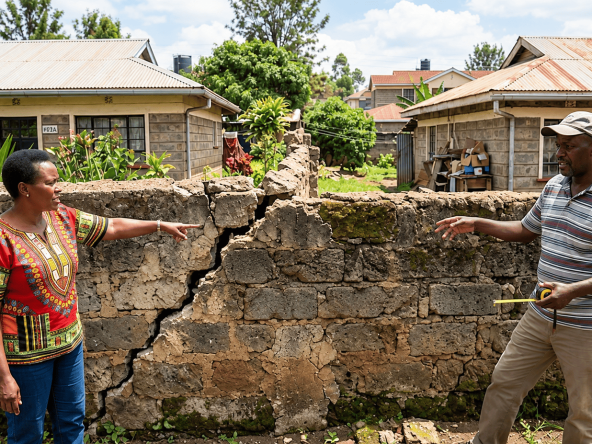

What the Magadi dispute reveals about land tenure, property rights, land rates and the questions every Kenyan buyer should ask before investing.
The ongoing dispute involving Tata Chemicals Magadi, the national government and Kajiado County has drawn attention to the value of land, mineral resources, historical leases and the obligations attached to property rights.
For ordinary Kenyans, however, the story raises a question closer to home: What should a property buyer understand before purchasing land or investing in a home?
The answer begins with an important principle: a title deed is essential, but it is not the whole story.
Whether someone is buying a residential plot, a family home, agricultural land or a property in a gated community, the real value of that investment depends on more than its location and appearance. Ownership, tenure, boundaries, restrictions, outstanding obligations and the intended use of the property all matter.
Read Also: Why You Should Visit an Off-Plan Property Site Before You Buy
What Is the Tata–Kajiado Land Dispute About?
Tata Chemicals Magadi operates around Lake Magadi in Kajiado County, where soda ash is produced from trona, a naturally occurring mineral. The operation has a long history, with commercial production in the area dating back to 1911.
The latest confrontation followed a July 2026 government suspension of the company’s mining and export activities pending a compliance review. The issues reported include mineral beneficiation, local value addition, royalty reconciliation, community development, employment, local procurement and environmental compliance.
On September 3, 2026, President William Ruto directed Tata Chemicals to end its operations in Kenya, arguing that the country should obtain greater industrial and economic benefits from its mineral resources. Tata Chemicals, in response, said it respected the government’s authority, maintained that it was fully compliant and remained committed to resolving outstanding matters through legal and regulatory channels. A technical committee was subsequently announced to review the issues.
The dispute also has a separate history involving land rates and royalties claimed by Kajiado County. In October 2025, the Court of Appeal quashed a KSh17.4 billion demand relating to a particular claim covering 2013–2018. That judgment should not be confused with a final resolution of every current dispute involving the company.
For property buyers, the important lesson is not to assume that every question about land can be answered by looking at a title document alone.
1. Understand the Difference Between Ownership and Occupation
One of the most important land ownership lessons in Kenya is that ownership and occupation are not always the same thing.
Land may be held under freehold or leasehold tenure. A lease can grant extensive rights to occupy and use property, but those rights are governed by the lease terms, duration, conditions and applicable law.
This distinction matters when buying property. A buyer should understand whether they are purchasing freehold land, a leasehold interest, a sectional title or another legally recognised form of ownership.
For example, a person buying a house in a gated community in Kenya should ask whether the property comes with an individual title, a sectional title or another documented ownership arrangement. The answer affects the buyer’s rights, obligations and future transactions.
Read Also: A Beautiful House Is Not Enough: The Five Things That Make a Home Work for a Family
2. A Title Deed Should Be Verified, Not Simply Admired
A title deed is one of the most important documents in a land purchase in Kenya, but a responsible buyer should go beyond seeing a photocopy or receiving verbal assurances.
Before committing money, the buyer should establish:
- Whether the seller is the registered owner.
- Whether the title details match the property being sold.
- Whether there are registered charges, cautions or restrictions.
- Whether the seller has legal authority to transfer the property.
- Whether the land has any known court disputes or competing claims.
An official land search conducted through the appropriate government channels is an important part of this process. An independent advocate can also help interpret the search results and identify issues that may affect the transaction.
The principle is simple: do not treat a title deed as a substitute for due diligence.
3. Land Rates and Other Obligations Can Affect Property Value
The Tata–Kajiado dispute also highlights the importance of understanding land rates in Kenya and other obligations associated with property.
Depending on the type and location of land, a buyer may need to consider county land rates, land rent where applicable, service charges, management fees and other property-related costs.
These obligations can affect the total cost of ownership.
A property may appear affordable at the purchase stage, but outstanding obligations or recurring charges can change the financial picture. This is particularly relevant to buyers comparing plots for sale in Kenya, residential homes and properties within managed developments.
Before purchasing, ask:
Are there outstanding land rates, land rent or other charges? Who is responsible for settling them, and what documentation confirms the position?
The answer should be established before the transaction is completed.
4. Land Use Matters as Much as Land Ownership
Owning land does not automatically mean that every possible development is permitted.
Planning regulations, zoning, environmental requirements, building approvals, access arrangements and other restrictions may affect how property can be used.
This is especially important for buyers who intend to build a home, establish rental units or develop commercial premises.
Someone purchasing a residential plot should confirm that the intended development is compatible with the applicable planning requirements. A buyer interested in buying land in Kiambu, plots along Thika Road or property in another developing area should not rely solely on the seller’s description of the land.
A beautiful location is valuable. But a clear and lawful development pathway is equally important.
Read Also: Banks Brace for Real Estate Loan Trouble Even as NPL Ratio Falls
5. Historical Agreements Can Have Present-Day Consequences
The Magadi dispute demonstrates how historical land arrangements can remain relevant many years after they were created.
For ordinary property buyers, this is a reminder to examine the chain of ownership and the documents supporting a transfer.
Land may have passed through inheritance, subdivision, sale, consolidation or other transactions. Each stage can affect the documentation and legal position of the property.
This is why buyers should be cautious when presented with explanations such as:
“Everyone knows this land belongs to our family.”
Or:
“The previous owner had already agreed to sell it.”
Such statements may provide background, but they do not replace legally verifiable ownership and transfer documents.
6. Location Is Important—but Infrastructure and Access Matter Too
When evaluating real estate in Kenya, buyers often focus on price, neighbourhood growth and proximity to major roads. These are important considerations, but they should be assessed alongside practical questions.
Does the property have reliable legal access? Are roads usable throughout the year? Is there a dependable water supply? What is the electricity situation? Are drainage, security and other essential services available?
For buyers considering gated community homes in Kenya, these questions are particularly relevant because the quality of a development depends not only on the house itself, but also on the infrastructure and services supporting everyday life.
A property’s long-term usefulness is shaped by how well it serves the people who will live there.
A Practical Land-Buying Checklist for Kenyan Buyers
Before purchasing land or a home, consider the following:
| Due-diligence question | Why it matters |
|---|---|
| Who is the registered owner? | Confirms the person or entity legally entitled to sell. |
| What type of tenure does the property have? | Establishes the nature of the ownership rights. |
| Has an official land search been conducted? | Helps identify registered interests and restrictions. |
| Are there outstanding rates, rent or charges? | Prevents unexpected financial obligations. |
| Are the boundaries clearly established? | Reduces the risk of boundary disputes. |
| Is the intended development permitted? | Helps ensure the property can be used as planned. |
| Is there reliable legal access? | Supports practical and lawful use of the property. |
| Has an independent advocate reviewed the transaction? | Helps identify legal risks before money changes hands. |
Read Also: The Compound Test: What Your Home Reveals About the Life You Actually Live
What This Means for Anyone Buying Property in Kenya
The Tata–Kajiado dispute is still developing, and its final legal and commercial implications will depend on the applicable agreements, regulatory processes and court decisions.
But one lesson is already clear: land is valuable because of the rights, opportunities and obligations attached to it—not simply because of its size or location.
For a first-time buyer, that means taking time to understand the property before signing an agreement. For an investor, it means examining the legal and practical foundations of the asset. And for a family purchasing a home, it means ensuring that the property can support the life they intend to build there.
At Willstone Homes, we believe that informed property decisions begin with clarity. Whether you are exploring gated community homes in Kenya, plots for sale in Kiambu, or a home along Thika Road, the goal should be more than finding an attractive property.
It should be finding a property whose ownership, documentation, location and development potential make sense for your future.
Because in real estate, what you understand before buying can be just as important as what you buy.