
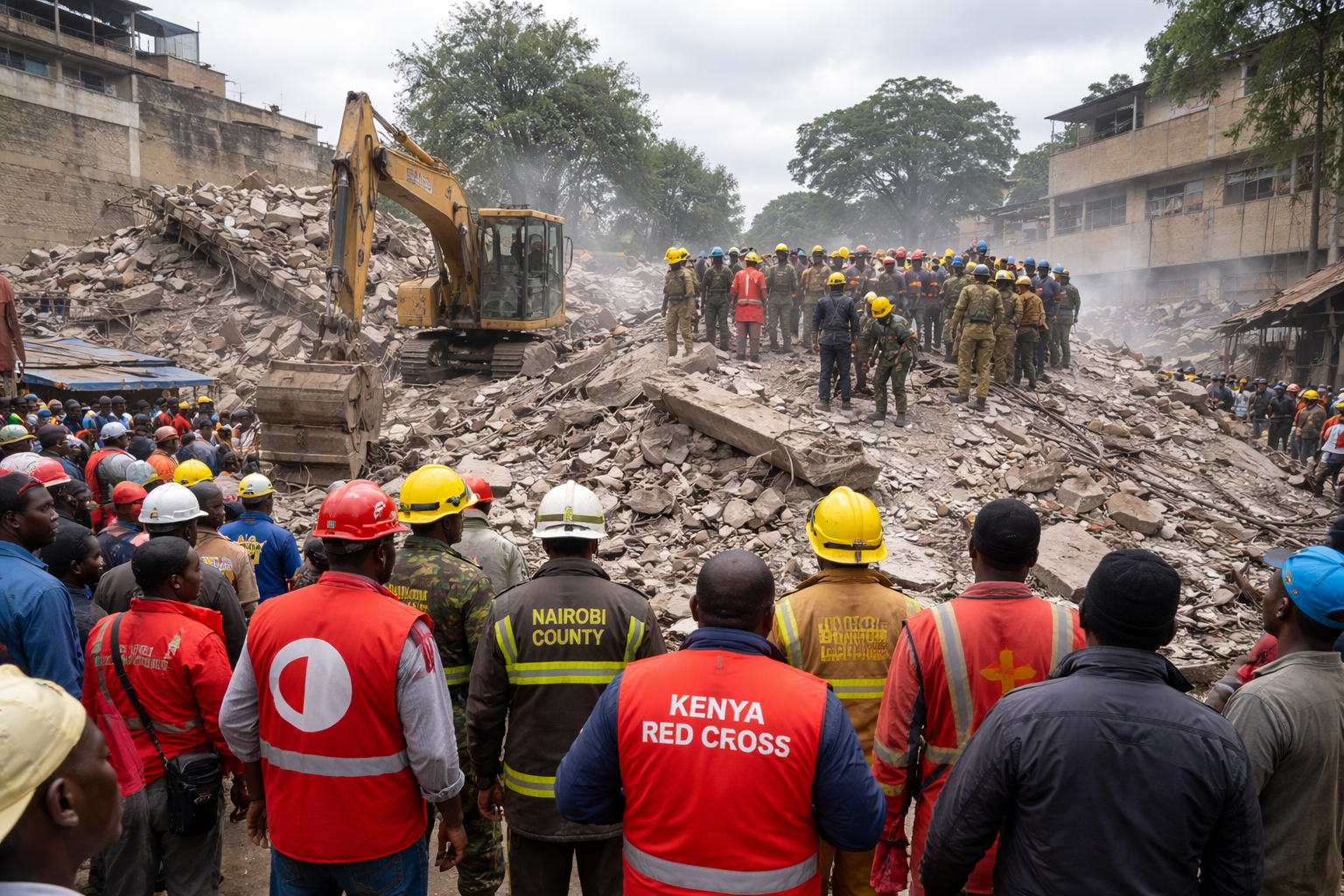
A building collapsed on Tuesday, March 16, 2026, in the Blue Estate area of Shauri Moyo, leaving several people feared trapped beneath the rubble. The incident, which occurred earlier in the day, has once again raised serious concerns about safety within the Nairobi real estate market.
According to the Kenya Red Cross, the structure collapsed adjacent to buildings that were being demolished on riparian land, triggering an emergency response as rescue teams rushed to the scene.
Collapse Linked to Riparian Land Demolition

According to the Kenya Red Cross, the collapsed structure was located next to buildings that were being demolished on riparian land. This raises serious questions about compliance and safety standards in real estate in Nairobi Kenya.
Emergency response teams were quickly deployed, and rescue operations are ongoing as authorities work tirelessly to locate survivors trapped under the debris.
Police have yet to confirm the number of casualties or injuries, while anxious residents gathered nearby awaiting updates.
Rescue Operations Underway
Multi-agency teams including:
- Nairobi City County
- National Youth Service (NYS)
- Kenya Defence Forces Disaster Response Battalion
- Nairobi Fire Brigade
have been mobilized to manage the crisis.
Heavy machinery is being used to clear rubble—highlighting the increasing risks associated with poorly regulated property developers in Nairobi.
Rising Concerns in Kenya Property Market

This latest disaster adds to a worrying trend affecting the Kenya property market, where building collapses have become increasingly common.
Recent Incidents:
- January 11, 2026 – Karen
- Two workers died after a building under construction collapsed
- Seven others sustained injuries
- January 2, 2026 – South C
- A 14-storey building suffered a pancake collapse
- Multiple people were feared trapped
Authorities attributed these incidents to:
- Poor workmanship
- Weak structural integrity
- Inadequate supervision
Impact on Property Investment in Kenya
These repeated failures are beginning to shake confidence in property investment Kenya, especially among buyers looking for:
- Apartments for sale in Nairobi
- Affordable houses in Nairobi
- Rental property investment Kenya opportunities
Investors are now prioritizing safe property investment in Kenya, with increased focus on:
- Verified developers
- Approved building plans
- Structural compliance
Experts Warn of Systemic Failures

Construction professionals across multiple disciplines—including engineers, architects, and planners—have raised alarm over systemic failures in the industry.
Led by Shammah Kiteme, President of the Institution of Engineers of Kenya, experts revealed:
- Over 200 buildings have collapsed in Kenya since 1996
- A culture of impunity continues to endanger lives
“The South C collapse was preventable and highlights deep-rooted systemic failures across planning, approvals, construction, supervision, and enforcement,” Kiteme stated.
What This Means for Buyers & Investors
For those exploring real estate opportunities in Kenya, this incident is a wake-up call.
Key Takeaways:
- Avoid developments on riparian or disputed land
- Conduct due diligence before you buy property in Kenya
- Prioritize trusted real estate developers in Kenya
- Focus on secure buy-to-let property Kenya options
The Bigger Picture: Nairobi Property Market Trends

The Nairobi property market trends now show a shift toward:
- Safer, regulated developments
- Gated communities in Nairobi
- Verified property listings Kenya
This shift is particularly important for:
- Diaspora investors seeking Kenya diaspora property investment
- Buyers searching for homes for sale in Nairobi
- Investors targeting real estate returns in Kenya
The Shauri Moyo building collapse is more than just a tragic incident—it is a critical signal to regulators, developers, and investors within the real estate investment Kenya space.
Without stricter enforcement and accountability, such disasters risk undermining confidence in an otherwise promising sector.
As demand for property in Nairobi Kenya continues to rise, ensuring safety, compliance, and professionalism must become the foundation of the industry.