
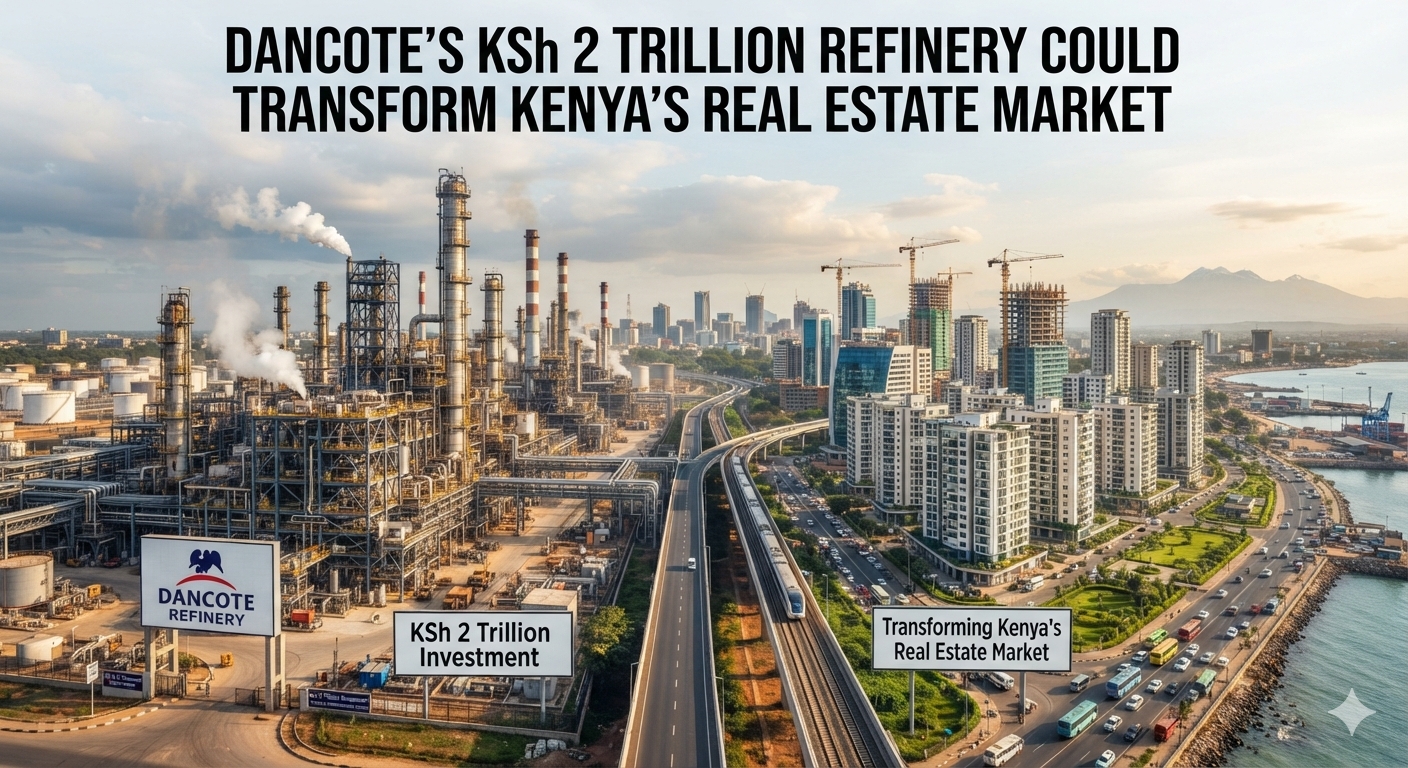
Kenya’s real estate market could be heading for a major transformation following the groundbreaking of the Dangote East Africa Petroleum Refinery in Lamu County.
The proposed US$16 billion, or roughly KSh 2 trillion, investment is designed to process 700,000 barrels of crude oil daily and will include petrochemical facilities and a power plant. If construction and supporting infrastructure proceed according to plan, the project could create a new centre of economic activity in coastal Kenya.
For the Kenya real estate market, that could mean increased demand for residential real estate, commercial property, rental housing, industrial real estate and land.
Residential Real Estate Could See New Demand
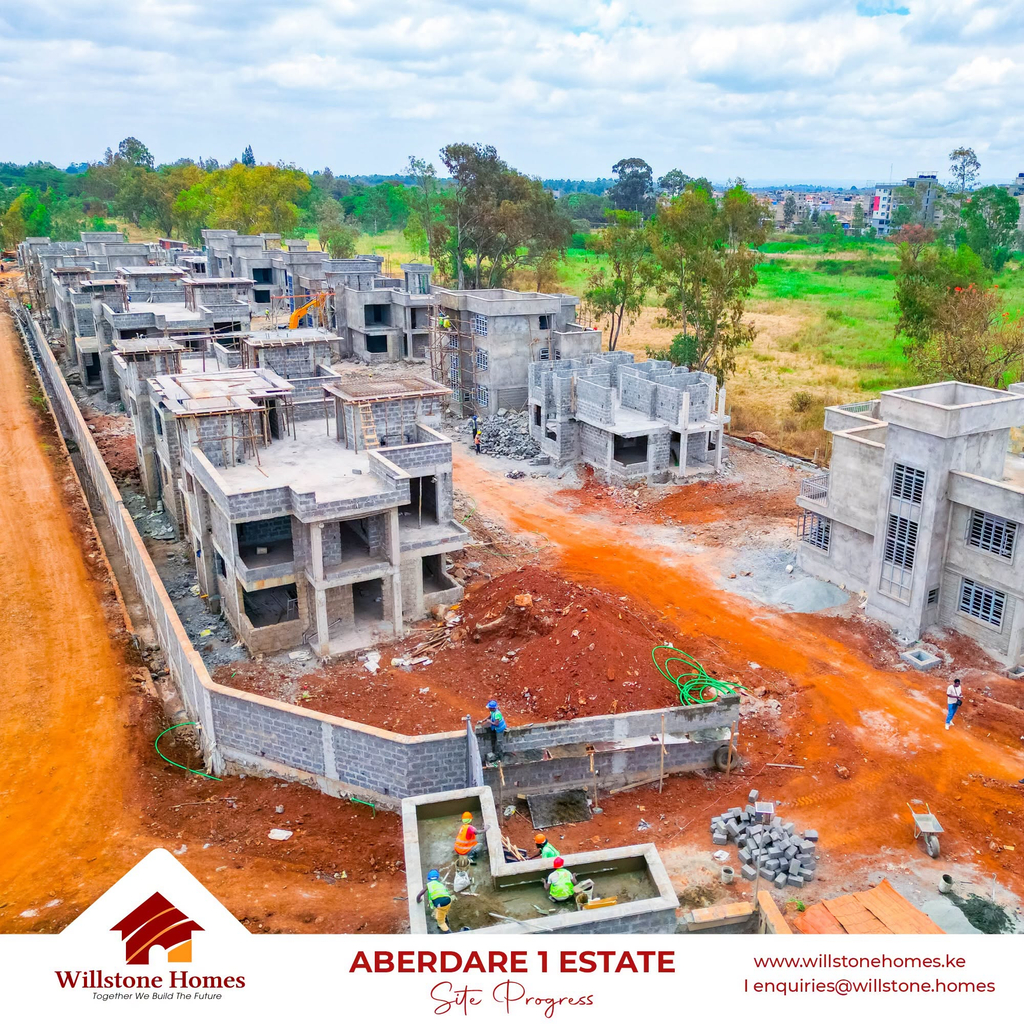
One of the earliest effects could be increased demand for residential property in Lamu.
A refinery of this scale will require engineers, technicians, construction workers, security personnel, administrators, logistics workers and other employees. Many will need somewhere to live during construction, while permanent employees could create longer-term demand once the refinery becomes operational.
This could create opportunities for rental property, apartments, houses, furnished accommodation and serviced apartments.
Contractors may also rent entire houses or apartment blocks for their employees. Hotels and guesthouses could benefit from visiting engineers, consultants, suppliers and other professionals connected to the project.
However, investors should not assume that every worker will rent privately owned property. Some companies could provide staff housing or use construction camps.
That makes actual worker numbers, housing arrangements and location particularly important when assessing a residential real estate investment.
Read Also: Budget-Friendly Finishes That Add Resale Value in Kenya
Land Investment Could Become More Attractive

Large industrial projects often trigger increased interest in surrounding land.
In Lamu, areas close to the refinery, transport corridors, existing settlements and designated industrial zones could attract land investment from developers and businesses looking to position themselves ahead of future growth.
Land could eventually be required for housing estates, shops, restaurants, warehouses, offices, schools and other supporting businesses.
But investors need to distinguish between land that has genuine development potential and land being marketed purely on speculation.
A plot with good road access, electricity, water, clear ownership and appropriate planning permissions could have considerably greater value than an isolated parcel simply because it is described as being “near the Dangote refinery.”
There is also no guarantee that land prices will double or triple. Investors should look at actual property transactions and achievable rental income rather than relying entirely on asking prices.
Commercial Real Estate Could Expand

A growing industrial workforce will need more than houses.
It will need supermarkets, restaurants, pharmacies, banks, hardware shops, entertainment facilities, clinics and other services.
This could stimulate commercial real estate development around emerging population centres.
Small shopping centres and mixed-use developments could become particularly relevant as businesses seek premises close to workers and growing communities.
For property investors, this could create opportunities in commercial property for sale, retail units, office space and mixed-use developments.
The strongest locations are likely to be those where population growth and business activity become measurable rather than simply anticipated.
Read Also : The Screen-Free Childhood: How Gated Community Design Changes How Kids Grow Up
Industrial Real Estate Could Be a Major Opportunity
Another important part of the potential property story is industrial real estate.
The refinery will require a large network of suppliers and service providers. Companies involved in logistics, equipment maintenance, engineering, transportation, construction and other activities could require warehouses, workshops, storage yards and offices.
If petrochemical and related manufacturing activities develop around the refinery, demand for industrial property could expand further.
This could make warehouses and logistics facilities an increasingly important part of Lamu’s property market.
However, industrial property requires more than cheap land. Access roads, electricity, water, drainage, security and appropriate zoning are critical.
A warehouse located in an unsuitable area may struggle to attract tenants regardless of how close it is to the refinery.
Affordable Housing Could Become a Significant Market
Not every employee associated with the refinery will be a senior executive.
Technicians, security personnel, drivers, administrative workers, service providers and other employees will require housing at different price points.
This could create opportunities for affordable housing in Lamu, particularly modest apartments and rental houses close to employment centres.
Developers who can provide decent housing at realistic rents could potentially tap into a much larger market than developers focusing exclusively on high-end homes.
Infrastructure will be critical.
Reliable water, electricity, roads, drainage and waste management will influence both construction costs and rental demand.
For this reason, buying cheap land without considering the cost of connecting it to essential services could become an expensive mistake.
Read Also; Who Pays When a Water Pipe Bursts Under a Shared Access Road in Kenya?
What About Property Prices in Mombasa and Nairobi?

The refinery’s real estate impact could extend beyond Lamu, although the effects are likely to differ from one location to another.
In Mombasa real estate, changes could emerge through logistics, petroleum distribution, storage and transportation activity.
Nairobi could benefit if companies involved in the refinery maintain corporate offices, finance departments, professional services and regional management operations in the capital.
That could create additional demand for selected office and residential properties.
However, the refinery should not automatically be interpreted as a trigger for a nationwide property price boom.
The strongest effects should logically occur where the investment generates actual jobs, businesses, infrastructure and population growth.
The LAPSSET Connection
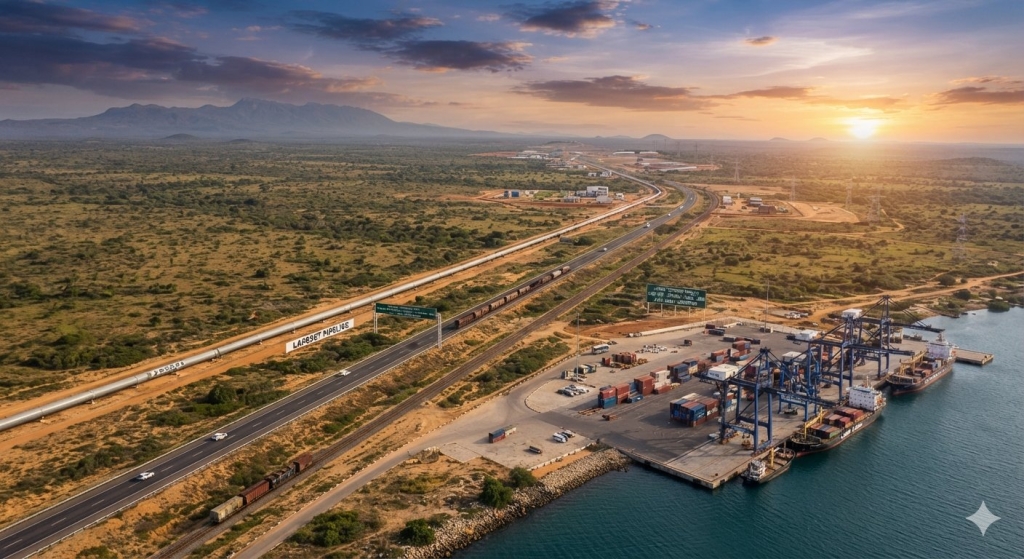
The wider LAPSSET Corridor could be an important part of the story.
The corridor is intended to connect Lamu with northern Kenya and neighbouring countries through transport and logistics infrastructure.
If more of this infrastructure is completed and becomes operational, it could strengthen demand for logistics real estate, warehouses, commercial property and residential development along selected economic centres.
This could give Lamu a role beyond simply hosting an oil refinery.
But investors should separate completed infrastructure from projects that are still planned or under development.
A property should not be valued on the assumption that every proposed road, railway, pipeline or industrial project will automatically be completed.
The Risks Facing Real Estate Investors
The potential opportunities come with significant risks.
The first is construction delays. A project of this magnitude can encounter financing, technical, regulatory or legal challenges.
The second is land ownership.
Investors buying land around a major infrastructure project should conduct proper title searches, survey verification and legal due diligence. Being told that a particular plot is “next to the refinery” is not sufficient protection.
Environmental and planning considerations also matter, particularly in a sensitive coastal environment.
Another risk is speculative pricing.
If landowners increase prices because they expect future demand, investors could end up paying today’s premium for tomorrow’s uncertain market.
The safest property investment thesis is therefore not simply “the refinery is coming.”
It is:
Will this particular property serve a real economic need created by the refinery and the businesses around it?
Read Also: What Happens to Your Plot If the Seller Is Married? Spousal Consent and Land Sales in Kenya
What Property Investors Should Watch

Anyone considering property investment in Lamu should monitor several developments over the coming years.
These include:
- Actual refinery construction progress.
- The number of workers being employed.
- Where employees will be housed.
- New supplier and logistics companies entering the area.
- Road, water and electricity improvements.
- New commercial and residential developments.
- Actual land transaction prices.
- Achieved rental rates.
- Industrial and commercial property occupancy.
- Land acquisition, planning and environmental developments.
These indicators will provide a better picture of the emerging Lamu real estate market than speculation on social media or aggressive land marketing.
The Dangote refinery could become much more than an energy project for Kenya. If it is completed broadly as planned and supported by related infrastructure and industries, it could become a major catalyst for real estate development in Lamu.
The potential opportunities span residential real estate, rental property, affordable housing, commercial real estate, industrial property, warehouses, logistics facilities and land investment.
But the real estate winners will ultimately be determined by actual economic activity.
For property investors, the important question is not simply whether Lamu land prices will rise.
It is whether a particular property has the location, infrastructure, legal status and economic purpose to benefit from the new demand created by one of Kenya’s biggest industrial investments.
For those looking to invest in residential property, gated community homes or land in Nairobi and Kiambu, Willstone Homes provides an opportunity to explore property options in established and emerging growth areas. Its portfolio includes homes and plots in locations such as Juja, Ruiru, Kiambu and along Kangundo Road, helping buyers assess opportunities beyond the immediate excitement surrounding major infrastructure announcements.
Whether purchasing a family home or investing for the future, the principle remains the same: look beyond today’s headlines and choose property based on location, value, infrastructure and long-term potential.
Explore available homes and plots through Willstone Homes.