

As the United States moves to withdraw funding from several major United Nations bodies, the decision is expected to leave a significant financing gap across multiple global programmes. While the move is framed as a foreign policy realignment, it carries meaningful implications for the Nairobi Kenya real estate market and, more specifically, for Real estate investment in Nairobi Kenya.
For a city whose high-end residential pipeline has increasingly been shaped by expectations around international institutions, this development introduces a new layer of uncertainty—one that challenges assumptions behind recent premium developments.
Read Also: Is Nairobi Property Market Outlook 2026 Signaling a Location Reset?
Why Nairobi Entered the Conversation
Nairobi has, for several years, been quietly positioned as a growing strategic hub within the UN system. Since 2024, market conversations have increasingly referenced the possibility of additional UN officials relocating to the city from New York and parts of Europe.
Whether these relocations were formally confirmed or still under discussion became almost secondary. In real estate, expectation often carries nearly as much influence as reality. That anticipation alone began shaping investment behaviour and site selection—particularly within Real estate investment in Nairobi Kenya.
Real Estate Moves on Anticipation
With Nairobi already hosting the UN’s headquarters in Gigiri, attention naturally shifted to neighbourhoods that traditionally attract diplomats and senior expatriates.
These include:
- Gigiri
- Westlands
- Runda
- Muthaiga
- Karen
Developers intensified activity in these locations, increasing the supply of high-specification apartments and standalone homes designed for international tenants.
The underlying logic was straightforward: a larger presence of senior UN staff would translate into stable, long-term demand for premium housing. In practice, developers rarely wait for demand to materialise—they position supply ahead of it.
Pricing strategies, design standards and land acquisition decisions were therefore increasingly aligned with expectations of sustained expatriate-driven demand within the Nairobi real estate market and Real estate investment in Nairobi Kenya.
Where the Uncertainty Creeps In
The U.S. decision to reduce funding now introduces a critical pause in that narrative.
While funding cuts do not automatically cancel relocation plans, they do signal the possibility of:
- slower programme implementation,
- scaled-back operational expansion, and
- more cautious long-term planning by UN agencies.
For a market that had already begun pricing in future international institutional demand, this uncertainty matters. Not because it diminishes Nairobi’s appeal as a diplomatic and commercial centre, but because it directly challenges some of the growth assumptions that informed recent high-end development pipelines tied to Real estate investment in Nairobi Kenya.
Implications for Kenya’s Real Estate Market

This is not a market shock, and it does not weaken Nairobi’s fundamental strengths.
The city continues to serve as a major regional base for:
- embassies and diplomatic missions,
- multinational corporations, and
- international non-governmental organisations.
However, the current development raises a more strategic question for investors and developers:
How much of Kenya’s premium residential supply is anchored to global institutional expectations that the local market does not control?
For participants in Real estate investment in Nairobi Kenya, the answer is increasingly important.
Markets built on anticipation can perform strongly, but they also require flexibility. Developers and investors who assumed a linear growth path driven primarily by international agency expansion may now need to reassess:
- absorption timelines,
- achievable rental pricing, and
- target tenant profiles.
This reassessment is particularly relevant for luxury and upper-mid-segment projects in diplomatic zones, where pricing is often justified by projected expatriate demand rather than domestic affordability trends.
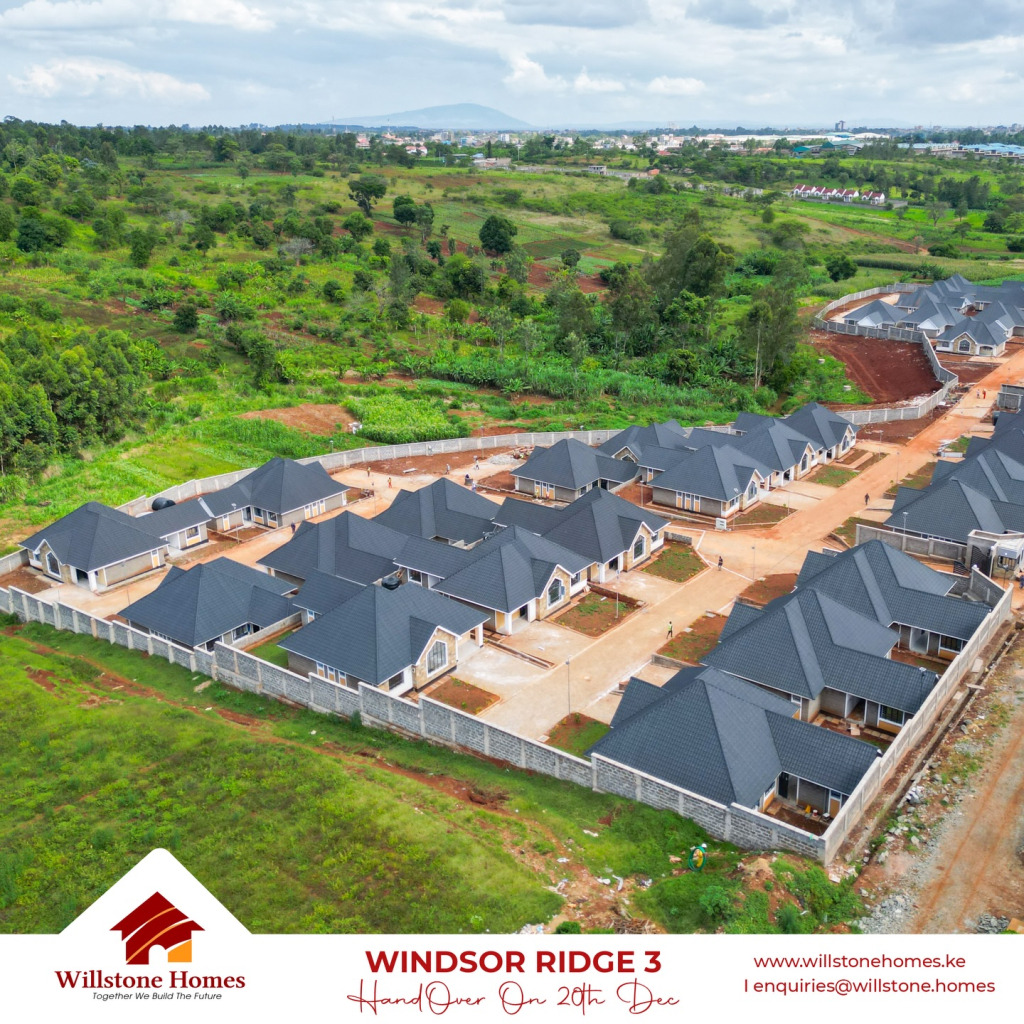
At the same time, the broader market—especially mid-income housing, gated communities and commuter-belt developments—continues to be supported by local demand linked to property ownership in Kenya and the steady rise of home ownership in Kenya.
At its core, this moment illustrates how closely Real estate investment in Nairobi Kenya has become intertwined with global political and institutional dynamics.
Policy decisions taken thousands of kilometres away can quietly influence development pipelines, pricing strategies and neighbourhood transformation at home.
In real estate, expectation may guide early decisions—but reality ultimately determines performance. The most resilient investors and developers are those who understand both forces, and who leave room for market structures to adjust when global conditions inevitably change.
Read Also: Real Estate Investment in Nairobi Kenya: A Practical Guide with Willstone Homes