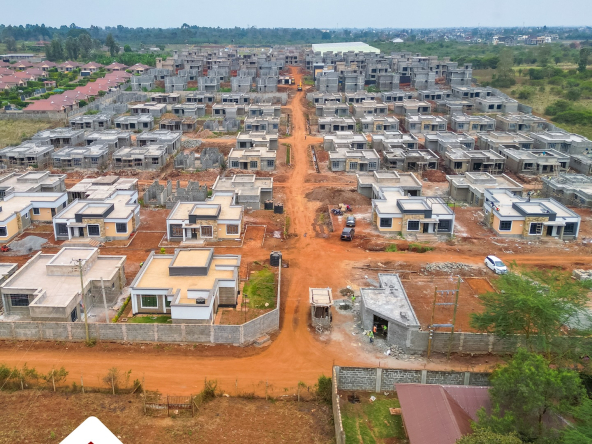

Developers Slow New Projects as Financing Tightens and Investors Turn Defensive
Kenya’s real estate sector is entering a more cautious and disciplined phase as developers and investors prepare for the country’s next general election cycle in 2027. Political uncertainty, elevated borrowing costs, and tightening capital flows are prompting developers to delay speculative developments and focus on completing ongoing projects.
Historically, Kenya’s property market experiences periods of investor caution in the years leading up to national elections, as financiers adopt a wait-and-see approach and developers prioritise liquidity and risk management.
According to industry analysts, 2026 is shaping up to be a year of consolidation rather than aggressive expansion in the sector.
“2026 will be a year for disciplined execution and strategic positioning. Markets rewarding quality, sustainability, and clear demand fundamentals will thrive, while speculative growth will likely pause,” said Mark Dunford, CEO of Knight Frank Kenya.
Read Also: The “Compliance Gap”: Why Many New Buildings Will Fail Mandatory Recertification In Future
Construction Activity Slows

A recent market update from Knight Frank Kenya shows that the value of approved building plans in Nairobi declined by approximately 24% year-on-year, indicating a slowdown in new project launches.
This does not necessarily signal a collapse in the market. Instead, it reflects a strategic pause as developers:
- Prioritise completing ongoing developments
- Reduce exposure to high borrowing costs
- Wait for clearer economic and political signals
Industry observers note that the slowdown is occurring even as Kenya’s broader economy remains relatively stable.
Kenya’s GDP grew by about 4.9% in 2025, with similar growth projections for 2026, according to economic forecasts. However, financing constraints and rising development costs continue to influence investment decisions across the real estate sector.
Read Also: Beyond Brick and Title: Mastering Capital Gains Tax in Kenya’s Most Coveted PropertyDestinations — From the Skyline Majesty of Kenyatta Road, Mang’u, Ruiru to the Sun-Drenched Kangundo Road, A Strategic Guide for the Discerning Investor
Segments Showing Stronger Resilience

While speculative developments are slowing, several segments of the property market continue attracting investment.
1. Affordable Housing
Affordable housing projects are gaining momentum, supported by government initiatives and public-private partnerships (PPPs). These developments are considered lower risk because they align with national housing policy and benefit from strong demand among middle-income buyers.
2. Grade A Office Buildings
Prime office developments—particularly Grade A office space with multinational tenants—remain relatively resilient. Companies increasingly prefer modern, energy-efficient office buildings, creating a “flight-to-quality” trend where tenants move from older buildings to premium spaces.
3. Special Economic Zones
Another bright spot is the growth of Special Economic Zones.
These zones continue to attract:
- Manufacturing firms
- Logistics companies
- Export-oriented businesses
Investor interest is driven by tax incentives, improved infrastructure, and Kenya’s strategic position as an East African trade hub.
Residential Market Remains Resilient

Despite slower construction activity, Kenya’s residential market—particularly in Nairobi—continues to show steady demand and improving rental yields.
According to the HassConsult Property Index, property prices and rents continued to rise modestly in late 2025.
Nairobi Residential Market Indicators (2025)
| Market Segment | Price Growth | Rent Growth | Rental Yield |
|---|---|---|---|
| Nairobi Suburbs | 0.8% | 1.5% | 7.4% |
| Satellite Towns | 4.5% | 8.7% | 5.2% |
Rental yields in Nairobi reached 7.4%, the highest level recorded since the index began in 2007, reflecting strong rental demand despite moderate price growth.
Growth in Satellite Towns
Satellite towns surrounding Nairobi continue to attract buyers and renters looking for more affordable housing options.
Areas experiencing strong growth include:
- Ruiru
- Kiambu
- Athi River
- Syokimau
Rental growth has been particularly strong in Ruiru and Kiambu, where annual rent increases reached 15.6% and 14.4% respectively. These commuter towns continue to benefit from improved infrastructure and lower property prices compared to central Nairobi.
Prime Nairobi Suburbs Remain Stable

Within Nairobi’s prime residential areas, the market remains relatively stable.
Suburbs such as:
- Ridgeways
- Lavington
recorded strong rental growth of 9.6% and 9% respectively, although sales prices rose more slowly due to increased housing supply.
The apartment market showed mixed performance across neighborhoods. Large developments completed in areas like:
- Westlands
- Upper Hill
temporarily increased housing supply, leading to slower price appreciation before stabilising toward the end of the year.
Read Also:Global Mortgage Demand Surges: What It Means for Kenya’s Real Estate Market
Outlook for Kenya’s Property Market
Looking ahead, analysts expect the Kenyan real estate sector to remain stable but selective through 2026 and early 2027.
Key trends likely to shape the market include:
- Continued growth in affordable housing projects
- Rising demand in satellite towns around Nairobi
- Increased interest in logistics, industrial parks, and SEZ developments
- Greater reliance on foreign capital and public-private partnerships
In the near term, developers are expected to remain cautious, prioritising financial discipline, strong demand fundamentals, and high-quality projects.
Once political uncertainty eases after the election cycle, the sector could enter another expansion phase driven by urbanisation and Kenya’s persistent housing deficit.