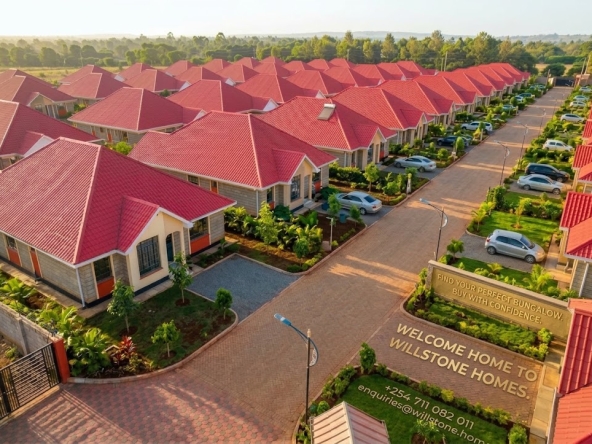

When buying a home, it is natural to think about the life you are living today.
You may be looking for an extra bedroom because you have young children. You may want a spacious compound because your family enjoys spending time outdoors. You may need a home office because you work remotely. Or perhaps you simply want a comfortable place where your family can settle down.
But there is another question worth asking before buying a home:
Will this house still work for me 20 years from now?
A home is one of the biggest purchases most people will ever make. Yet buyers sometimes evaluate it according to their needs at the moment of purchase rather than considering how their family, finances and lifestyle may change.
The concept of a 20-year home is therefore simple: look beyond today’s needs and consider whether the property can adapt as your life evolves.
For anyone considering homes for sale in Kenya, this long-term perspective can change the way you evaluate bedrooms, outdoor space, maintenance, location and even the basic layout of a house.
Read Also: A Beautiful House Is Not Enough: The Five Things That Make a Home Work for a Family
1. Can the Home Grow With Your Family?
Children do not remain children forever.
A bedroom that seems spacious enough for a young child may eventually need to accommodate a teenager. A play area may later become a study space. The family room may become increasingly important as children grow and spend more time at home.
This means that when looking at family homes in Kenya, buyers should think about how rooms can change purpose.
A flexible bedroom arrangement, adequate storage and spaces that can serve multiple functions can make a home useful for much longer.
The question is not simply, “How many rooms does this house have?”
Ask instead:
“What could these rooms become as my family changes?”
That is a much more powerful way of evaluating a property.
2. Think About the Home When the Children Are Grown
There is an interesting contradiction in buying a family home.
When children are young, parents often need more space. But 15 or 20 years later, some of those children may have left home for university, employment or their own families.
A house that was once full can suddenly feel very different.
This does not mean buyers should avoid larger homes. It means they should consider whether the property remains practical when the household becomes smaller.
Can a bedroom become a home office? Could a family room become a library, hobby area or guest room? Can parts of the house be used without requiring the homeowner to maintain every corner constantly?
Adaptability can make a significant difference to the long-term usefulness of a home.
3. Do Not Ignore Ageing
At 40, stairs may feel insignificant. At 60 or 70, the same stairs may become much more noticeable.
This is one reason buyers should think about ageing when purchasing a long-term home.
A practical 20-year home should ideally be comfortable to navigate as its occupants grow older. Consider the positioning of bedrooms, bathrooms, entrances and frequently used living spaces.
Even small details can matter. A convenient ground-floor bedroom, manageable steps, good lighting, sensible bathroom layouts and easy access to outdoor areas may become increasingly valuable with age.
You do not have to design your entire home around retirement today.
But there is wisdom in asking whether your future self will still find the home comfortable.
Read Also: Banks Brace for Real Estate Loan Trouble Even as NPL Ratio Falls
4. What Will Maintenance Look Like?
A house does not stop costing money after the purchase.
Roofs require attention. Paint eventually fades. Plumbing needs repairs. Gardens require maintenance. Electrical systems and appliances eventually need replacement.
This makes maintenance an important part of long-term homeownership.
When comparing modern homes in Kenya, buyers should look beyond attractive finishes and ask how practical the property will be to maintain.
A very complicated exterior, unnecessarily large landscaped area or difficult-to-access roof may create additional responsibilities over time.
A good home should not only be beautiful when it is new. It should remain manageable as the years pass.
The best long-term decisions often involve choosing durability and practicality alongside appearance.
5. Will Your Finances Look the Same in 20 Years?
Probably not.
Income can increase. It can also fluctuate. Children may enter expensive stages of education. Retirement may approach. Businesses may change. Unexpected financial responsibilities may arise.
That is why a home should be evaluated not only against today’s income but also against the possibility of changing financial circumstances.
A property that consumes almost every available shilling today may leave little room for future priorities.
When buying a home in Kenya, consider the total cost of ownership rather than the purchase price alone. Mortgage or financing obligations, utilities, repairs, security, landscaping, insurance and other household expenses can all affect the long-term affordability of a home.
The goal is not necessarily to buy the cheapest property.
It is to choose a home whose ownership remains financially manageable as life changes.
6. Can the Compound Adapt Too?
The house is only part of the equation.
The compound may need to accommodate additional vehicles, children playing, outdoor entertainment, gardening or simply a quieter lifestyle later in life.
This is particularly important when considering gated community homes in Kenya.
A well-planned compound can provide flexibility that becomes valuable over the years. Parking arrangements can accommodate a growing household. Outdoor areas can change from children’s play spaces into entertaining or relaxation areas. Landscaping can mature and create greater privacy.
The compound should therefore be viewed as living space—not merely the area left over after the house has been built.
7. Location Can Become More Important With Age
A location that works perfectly for a young professional may not necessarily offer the same convenience decades later.
Your priorities can change.
Today, you may care primarily about commuting to work. Later, access to schools, healthcare, shopping, recreation, places of worship, public transport and family connections may become more important.
This is why location should be assessed according to the different stages of life a household may experience.
For buyers exploring homes for sale in Nairobi and Kiambu, it is worth considering not just how long it takes to reach work today, but how the surrounding neighbourhood may serve the family over time.
A home is attached to its location for the entire period you own it.
8. Look for Spaces That Can Change Purpose
One of the most valuable characteristics of a long-term home is flexibility.
A room does not always need to have only one purpose.
A guest bedroom can become a study. A study can become a nursery. A children’s playroom can eventually become a teenage retreat. An outdoor area can transition from a children’s play space into an entertainment area.
This flexibility can prevent a homeowner from needing to move simply because the family’s needs have changed.
The ideal family home in Kenya may therefore not be the property with the most rooms, but the one whose spaces can continue serving different purposes throughout the family’s journey.
Read Also: The Compound Test: What Your Home Reveals About the Life You Actually Live
Your Future Self Is Also a Homebuyer
When viewing a property, it is easy to imagine the first year.
Imagine instead the fifth year.
Then the tenth.
Then the twentieth.
Will the rooms still make sense? Will the compound still work? Will maintenance remain manageable? Will the location continue to serve your family? Will the home accommodate changing finances and changing family needs?
These questions do not require anyone to predict the future. They simply encourage buyers to make decisions with a longer horizon.
At Willstone Homes, the idea of homeownership goes beyond finding an attractive building. A home should provide comfort today while giving a family room to adapt to tomorrow.
Because the best home is not necessarily the one that perfectly matches the life you have today.
It is the one that continues to make sense as your life changes.