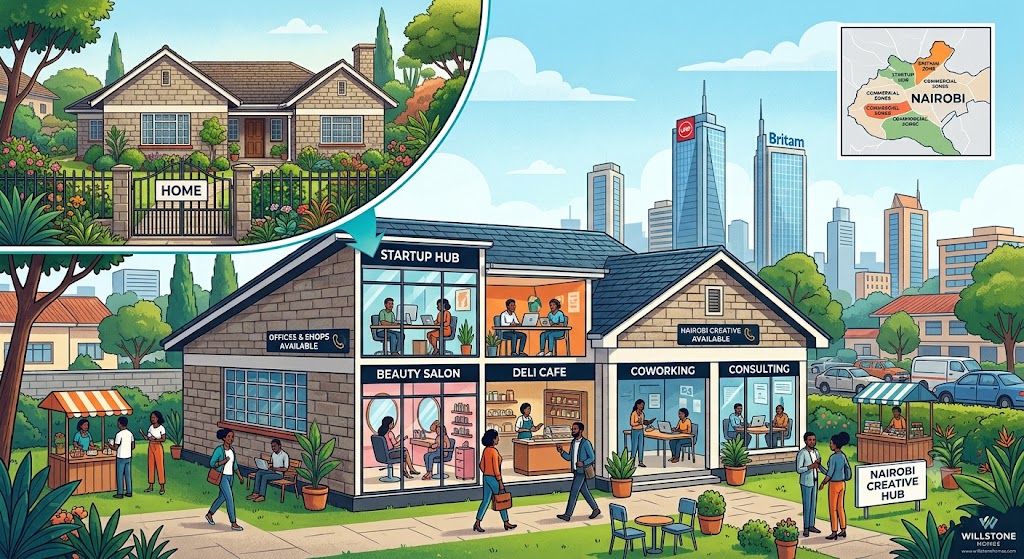
If you take a drive through Nairobi’s traditional, leafy residential nodes like Kilimani, Lavington, Westlands, or the rapidly growing Thika Road and Kenyatta Road corridors, you will notice a distinct architectural shift. The sprawling, standalone bungalows and multi-story maisonettes that once housed single families are quietly shedding their residential identities.
Step inside, and you won’t find a living room or a master bedroom. Instead, you will find a bustling ecosystem of micro-offices, high-end beauty salons, specialized consultancies, and boutique retail stalls.
This is the era of commercial property sub-division in the Kenyan real estate market—a massive, data-driven trend where smart landlords are retrofitting underperforming residential main houses into high-yielding, multi-tenant commercial units.
For property owners and real estate investors looking for the highest returns on investment (ROI), this shift represents the ultimate play in adaptive reuse and wealth optimization. Here is a deep dive into the economic engine driving this trend, the numbers behind it, and what it means for the future of property development in Nairobi.
Read Also: Rethinking the Family Legacy: Why Modern Gated Estates Have Replaced the Traditional Shamba
The Shift: Why Single-Family Residential Yields Are Shrinking

Historically, owning a 4- or 5-bedroom main house in a prime Nairobi suburb was the pinnacle of real estate investment. However, changing demographic trends and market realities have disrupted the traditional rental model.
Modern, affluent tenants are increasingly preferring high-security, low-maintenance luxury apartments and gated communities outside the immediate city hub. This has left landlords of older, standalone homes facing stagnant rental growth, high maintenance costs, and prolonged vacancy periods.
When a property sits vacant, the rental yield drops to zero. Moreover, relying on a single tenant for 100% of your property income introduces immense cash-flow risk. To survive and thrive, Nairobi landlords are pivoting from a macro-residential mindset to a micro-commercial strategy.
The Math: Tripling Your Rental Income Through Sub-Division
The core driver of the commercial sub-division boom comes down to simple real estate math: price per square foot.
Consider a typical, aging 5-bedroom maisonette in a prime commercial-fringe zone:
- The Traditional Approach: Leased to a single family or a small corporate headquarters, the entire property might command KES 130,000 to KES 150,000 per month.
- The Sub-Division Approach: The landlord structurally partitions the property into 10 to 12 individual, private “nano-offices” or retail cubicles. By leasing these smaller rooms to startups, e-commerce brands, or beauty professionals at a premium micro-rate of KES 35,000 to KES 45,000 per room, the gross monthly income skyrockets to KES 350,000 to KES 540,000.
[Traditional Single Lease]  --> KES 150,000 / month (High Vacancy Risk)
[Sub-Divided Micro-Lease]  --> KES 450,000 / month (Diversified Risk)
By shifting from a single-tenant lease to a multi-tenant commercial model, landlords are effectively doubling or tripling their gross rental yields on the exact same piece of land.
What’s Driving the Demand for “Nano-Commercial” Spaces?
This trend isn’t just driven by eager landlords; it is fueled by a massive supply gap in Nairobi’s business ecosystem.
Nairobi is the entrepreneurial hub of East Africa, dominated by micro-enterprises, consultants, tech startups, and independent service providers. These businesses do not need—and cannot afford—thousands of square feet of Grade-A commercial office space in towering corporate blocks.
They want a lean, private, professional space. Repurposed main houses offer the perfect middle ground. Tenants get a private, lockable room, while sharing the overhead costs of premium amenities:
- A centralized, professional reception area
- Shared boardroom and meeting facilities
- High-speed internet infrastructure
- Ample compound parking and green breakout spaces
Read Also: The Functional Luxury Checklist: Designing Homes for the Modern Kenyan Family
Golden Rules for a Successful Commercial Conversion

Converting a residential main house into a premium commercial unit requires careful planning. If you are looking to tap into this lucrative trend, you must execute the transition with strict attention to regulatory compliance and modern building standards.
1. Navigating the “Change of User” Process
You cannot simply open a commercial business in a strictly residential zone. To protect your investment from county crackdowns, you must formally apply for a Change of User through Nairobi City County. This process requires a registered physical planner, public notices in national newspapers, and alignment with regional zoning regulations.
2. Investing in Modern Internal Finishes
First impressions dictate rental premiums. Tenants will not pay top dollar for a space that still looks like a 1990s bedroom. Successful conversions rely heavily on modern architectural finishes. Replacing heavy timber doors and brick walls with acoustic glass partitions creates a bright, open, corporate aesthetic while maintaining strict sound privacy between competing businesses.
3. Upgrading Core Infrastructure
A property built for a family of five cannot naturally handle a daily foot traffic of 50+ people. Landlords must proactively invest in upgrading the property’s infrastructure:
- Water & Sanitation: Expanding water storage capacity and converting single family bathrooms into multi-stall commercial washrooms.
- Power & Connectivity: Installing dedicated sub-meters for each rented room and setting up robust, business-grade fiber optic internet.
- Parking & Accessibility: Converting front lawns into neatly paved, heavy-duty driveways to accommodate client parking.
Read Also: From Groundbreaking to Handover: The Anatomy of a Verified Development Lifecycle
The Future of Smart Real Estate Investing in Kenya
The commercial repurposing of Nairobi’s main houses is a powerful reminder that real estate is an evolving asset class. Wealth creation in property investment belongs to those who can identify underutilized spaces and adapt them to match modern market demand.
Whether you are looking to buy an older property to convert, or investing in master-planned, flexible developments from the ground up, maximizing your rental yield requires agility, foresight, and the right development partner.
Looking for high-yield real estate opportunities in Kenya’s fastest-growing corridors? Explore our latest master-planned developments atWillstone Homesand secure your financial future today.