
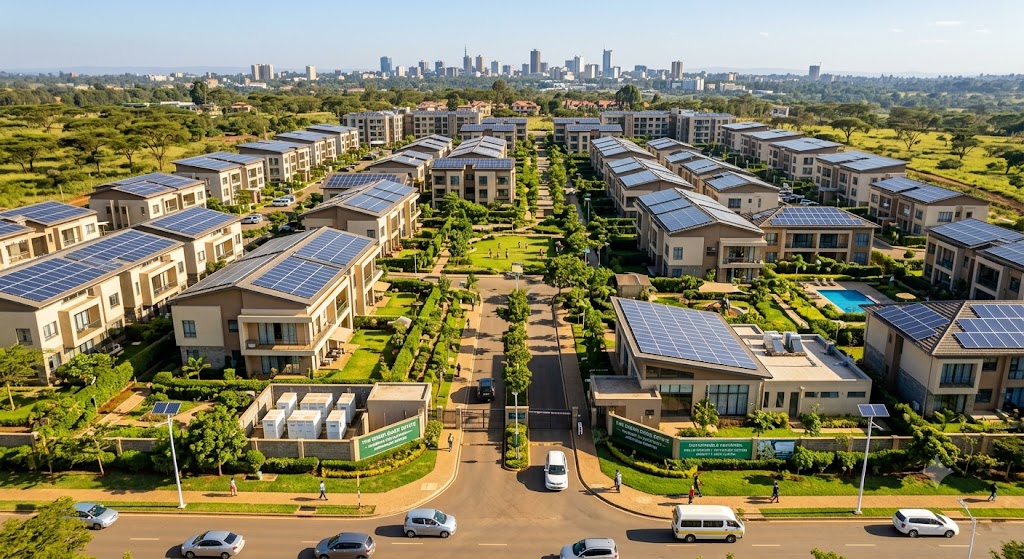
For the longest time, marketing apartments for sale in Nairobi followed a predictable blueprint: highlight the square footage, boast about the premium gypsum ceilings, and throw in a “flashy” postcode like Kilimani or Westlands. If the master bedroom was big enough to fit a king-sized bed, the unit practically sold itself.
But as we cross into mid-2026, that old framework has completely collapsed under the weight of utility inflation. Recent tariff reviews by the Energy and Petroleum Regulatory Authority (EPRA) introduced multi-layered forex fluctuation and fuel energy cost surcharges. These adjustments added a steep KSh 3.87 premium to every single kilowatt-hour (kWh) of electricity consumed nationwide.
Suddenly, middle-class households are waking up to a harsh reality: they are trapped by their electricity tokens. This financial pressure has triggered a major tenant revolt. Today’s renters are actively snubbing oversized, poorly engineered apartments in favor of resource-efficient green buildings in Nairobi. Tenants are doing the math, and they are choosing lower, predictable utility costs over extra square footage.
Read Also:Total Cost of Occupancy (TCO) vs. Base Rent: The New Tenant Math
Inside the Token Trap: The True Financial Drain of “Dumb” Buildings
To understand why the local market is punishing unserviced high-rises with extended vacancies, you have to look at the daily cost of operating a standard apartment.
Consider the classic Nairobi “instant shower” heater. In a building with no central solar infrastructure, a family of four taking daily hot showers consumes an immense amount of power. Add to that the cost of running water pumps to haul water to the 12th floor because the building relies entirely on erratic municipal lines or expensive, diesel-powered private bowsers.
       The Tenant Out-of-Pocket Math (Monthly Averages)
  ┌────────────────────────────────────────────────────────┐
  │  The Traditional "Dumb" Building                       │
  │  • KPLC Prepaid Tokens (Instant Showers): KSh 8,500   │
  │  • Water Bills (Private Bowser Surcharge): KSh 6,000   │
  │  • Total Hidden Monthly Drain: KSh 14,500              │
  └───────────────────────────┬────────────────────────────┘
                              │ VS. The Modern Green Pivot
  ┌───────────────────────────▼────────────────────────────┐
  │  The Solar-Sourced & Eco-Infrastructure Building       │
  │  • Central Solar Water Heating Tokens: KSh 1,200       │
  │  • Smart Water Treatment & Recycling: KSh 1,500        │
  │  • Total Modern Utility Burden: KSh 2,700              │
  └────────────────────────────────────────────────────────┘
When prospective renters look at cheap houses for sale in Nairobi, they no longer stop at the asking rent. They ask to see the landlord’s past token receipts. A property with a base rent of KSh 50,000 that carries a hidden KSh 15,000 utility tax is no longer competitive. This dynamic is leaving unserviced buildings trapped in high vacancy cycles, while amenity-rich developments featuring alternative energy loops are fully occupied.
The Rise of Sustainable Sanctuaries: What Modern Tenants Demand
This structural consumer shift is fundamentally changing how institutional developers deploy capital under the state’s broader affordable housing Kenya framework. Value is no longer defined by cosmetic finishes; it is driven by off-grid survival features.
Savvy developers are building out several vital, cost-saving pillars to attract this new generation of renters:
- Centralized Solar Power Apartments: By deploying industrial-grade solar photovoltaic (PV) arrays paired with centralized solar water heaters, buildings can bypass energy-heavy appliances. This drops average water heating costs by up to 80%.
- Graywater Recycling Microgrids: Progressive property designs now include localized treatment plants that recycle sink and shower wastewater for non-potable uses, such as flushing toilets and watering common area green spaces. This provides permanent insulation from the city’s fluctuating water distribution cartels.
- Smart Home Energy Monitors: Forward-thinking units feature integrated smart thermostats and motion-activated LED lighting systems. These tools allow tenants to track and optimize their power consumption in real time, completely avoiding the monthly token shock.
Modern renters have realized that space is a luxury you pay for once, but bad building infrastructure is a penalty you pay for every single month.
Read Also:Why PropTech in Kenya is Trapped in a Feedback Loop (and How to Fix It)
The New Investor Rulebook: Future-Proofing Your ROI
If your goal is to maximize your long-term rental yield in Nairobi, continuing to purchase commoditized, un-insulated brick-and-mortar structures is a massive financial risk. The house prices in Nairobi are increasingly sorting properties into two distinct tiers: assets that are climate-resilient and energy-independent, and assets that are rapidly depreciating due to utility inefficiencies.
Before you commit capital to any upcoming residential project, demand to see the mechanical and energy blueprints. Look for formal eco-certifications, such as IFC’s EDGE (Excellence in Design for Greater Efficiencies) standards. Investing in a solar-sourced, water-secure asset may carry a slight premium upfront, but it ensures your property stays insulated against rising tariffs, secures premium tenants, and remains highly protected against vacancy losses.