

For years, the Kenyan property market was driven by three classical forces: location, infrastructure, and pricing. But 2023–2025 introduced a surprising fourth pillar—climate data. Today, the Nairobi flood risk property market is quietly emerging as one of the most important metrics shaping buyer decisions, investor strategies, and even bank lending policies.
As extreme rainfall, flash floods, and heat pockets intensify, Kenyans—especially middle-class buyers—are now studying rainfall patterns, flood maps, and micro-climate zones with the same seriousness once reserved for title searches.
Why Climate Data Is Now a Real Estate Currency

The shift began after the 2023 and 2024 El Niño seasons, which damaged over 44,000 homes nationwide and caused drainage failures across major Nairobi suburbs (Ministry of Lands & Housing Data, 2024). Banks also started conducting climate-risk evaluations before approving mortgages in select high-risk zones such as South C, Imara Daima, and parts of Kasarani.
This gave rise to a new buyer mindset:
“Is the land safe from climate hazards?”
That question is now as important as title authenticity or the quality of the developer.
The result? Demand is rising sharply for Nairobi climate-resilient homes, while properties in flood-prone pockets are stagnating or losing value.
Read Also: December Dawn: Willstone Homes Enters The Grand Finale With Fire, Finesse & Unwavering Momentum
Table: How Climate Exposure Is Already Affecting Property Values (2024–2025)
| Zone Type | Rainfall/Flood Exposure | Avg. Land Price Change (2024–2025) | Buyer Sentiment |
|---|---|---|---|
| Flood-Safe Elevated Zones | Low | +12% to +18% | Very High |
| Moderate Risk Zones | Medium | 0% to +5% | Cautious |
| High-Risk Flood Zones | High | –5% to –15% | Avoidance Rising |
| Heat-Island Estates (Concrete-Dense) | Very High Heat | –2% to +3% | Mixed but Weakening |
| Green Buffer Suburbs | Low Heat, Low Flood | +10% to +20% | Extremely High |
(Data interpreted from Nairobi housing market data, 2024.)
The market is clearly rewarding Flood-safe neighborhoods in Nairobi, especially those with natural drainage, vegetation cover, or elevated terrain.
How Rainfall Maps Became a Buyer’s First Filter
1. Flood History = Future Pricing
Areas like Donholm, Pipeline, South B, and parts of Thika Road experience repetitive flooding because of blocked drains and low-lying terrain. This has forced buyers to reconsider long-beloved middle-income estates.
Meanwhile, elevation around areas such as Loresho, Uthiru, Ngong Road, Kamulu Heights, and Garden Estate has made them top choices for those watching Nairobi real estate trends closely.
2. Micro-Climate Awareness Has Gone Mainstream
Heat islands—areas that are significantly hotter due to dense concrete, poor tree cover, and excessive tarmacking—are now influencing home choices.
Buyers increasingly ask agents:
“Why is it hotter here than two streets away?”
Micro-climate pockets have become as influential as proximity to schools or matatu routes.
3. Off-Plan Buyers Are the Most Climate-Sensitive
Off-plan investors especially want climate stability because their projects take 24–48 months to complete. A flood event during construction can wipe out capital.
Developers building gated communities in safe zones are now marketing themselves explicitly as:
“Climate-resilient estates in Nairobi.”
The Science Behind Kenya’s New Weather-Based Property Logic
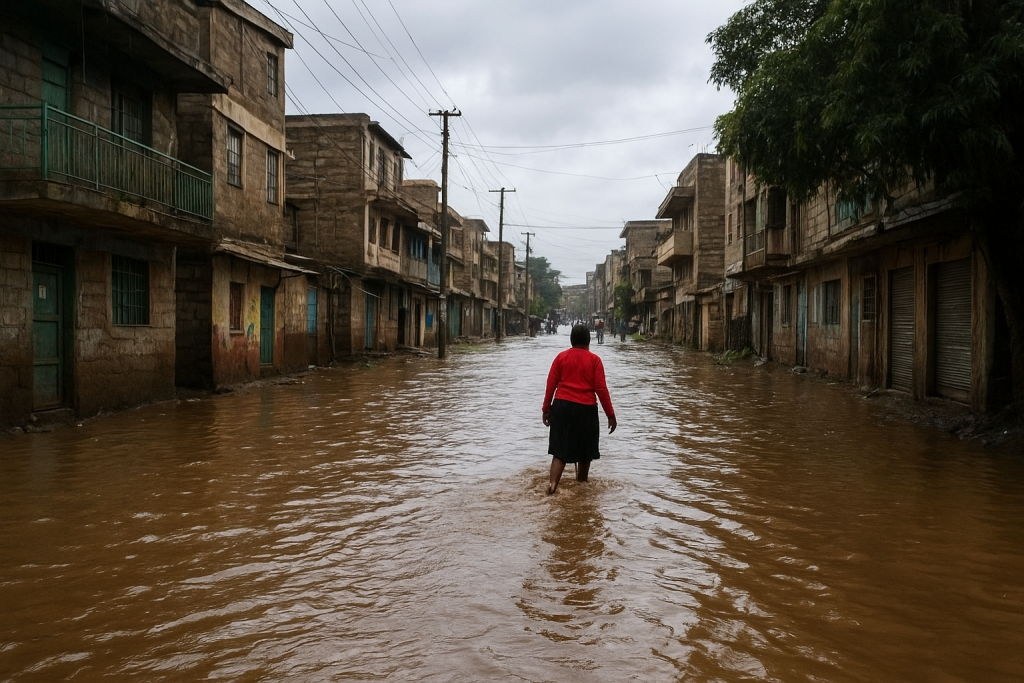
Three elements now define the Nairobi flood risk property market:
A. Elevation
Areas above 1,700 meters (e.g., Karen, Loresho, Ridgeways) remain flood-resistant, making them premium. Even mid-market buyers in Ruiru and Kamulu are checking contour maps before paying deposits.
B. Vegetation
Neighborhoods with high tree cover maintain cooler temperatures and better drainage. This is why land in Karen, Ongata Rongai green belts, parts of Kiambu Road, and Thindigua continues to appreciate.
C. Soil Composition
Black cotton soils retain water and worsen flooding. Sandy and mixed soils drain faster. Investors are now asking for soil tests—something previously done only by developers.
A land surveyor recently observed:
“The new Kenyan investor is no longer impressed by walls and roofs. They want to know whether the home will survive the next flood cycle.”
Where Nairobi Buyers Are Moving—And Why
Winners (High Demand)
- Kamulu Heights (elevated)
- Loresho / Kibagare (excellent drainage)
- Kiambu Road ridges (cooler micro-climate)
- Acacia–Kitengela green belt
These areas are now considered among the best estates to live in Nairobi for climate stability.
Losing Demand (Declining or Stagnant)
- Pipeline / Mukuru belt
- Parts of Kasarani–Mwiki
- South C lowlands
- Donholm Phase 8 pocket
- Portions of Ruai with black cotton soil
These zones require massive drainage upgrades to recover.
How Climate Data Is Changing Developer Strategy

Smart developers—especially those selling off-plan gated communities—are now integrating climate-resilience features such as:
- Geo-engineered drainage channels
- Elevated foundations
- Green buffers
- Solar-shade roofing
- Stormwater harvesting
- Permeable paving blocks
These improvements are boosting property values Nairobi as buyers increasingly look for homes that can endure the next 10–20 years of climate volatility.
Why Climate-Proof Estates Are the Future of Real Estate Investment Nairobi
Investors now see climate-safe areas as:
- Lower risk
- Higher resale potential
- Stronger rental returns
- Better mortgage approval rates
Banks are already adjusting mortgage underwriting to factor in flood exposure. This means weather-proof investing is no longer optional for buyers; it’s a prerequisite.
The evolution of the Nairobi flood risk property market signals a major shift in how Kenyan real estate works. Climate data is no longer a peripheral consideration—it is a pricing force, a risk factor, and a future predictor of value.
Buyers today are not only choosing homes; they are choosing safety, elevation, drainage, and long-term habitability. Developers who respond to this trend by creating Nairobi climate-resilient homes will attract the next wave of off-plan investors and dominate emerging suburban markets.
Climate-aligned real estate is no longer the future.
It is the present, and it is already shaping Nairobi’s next generation of estates.