
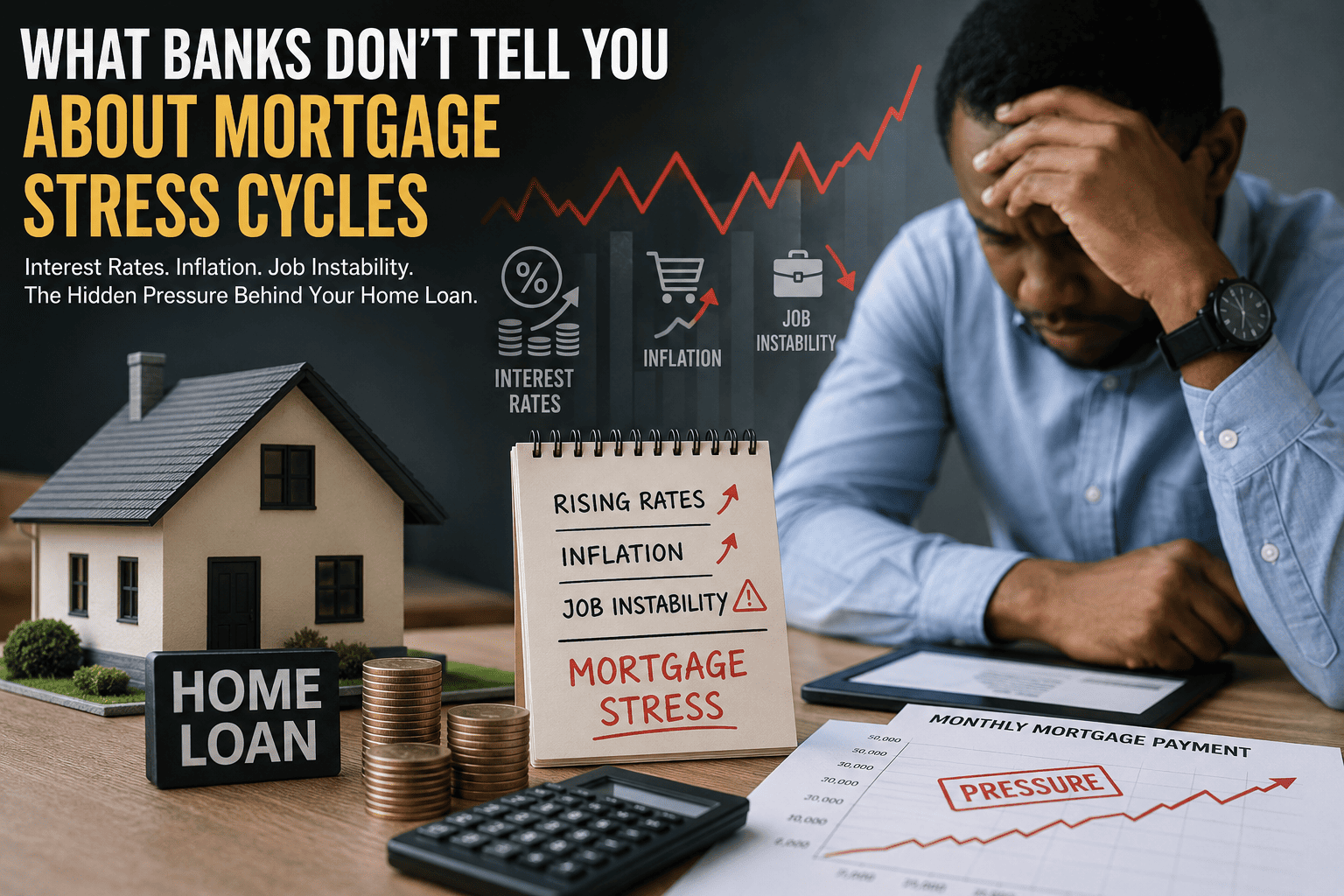
When most people apply for a mortgage, the conversation feels simple: you qualify for a loan, agree on a repayment plan, and move into your new home. What is rarely discussed in depth is what happens after you sign—especially when the economy shifts.
Mortgages are long-term financial commitments, often stretching 15 to 25 years. Over that time, economic conditions will change multiple times. Interest rates will rise and fall. Inflation will move in waves. Jobs will be gained and lost. These shifts create what can be called mortgage stress cycles—periods where repayment becomes easier or significantly harder depending on economic conditions.
Understanding these cycles is critical for any homeowner or investor in Kenya today.
What Is a Mortgage Stress Cycle?
A mortgage stress cycle refers to the financial pressure fluctuations experienced by borrowers over the life of a home loan due to changes in:
- Interest rates
- Inflation levels
- Employment stability
- Income growth or decline
- Currency and economic shocks
In simple terms, your mortgage does not remain “fixed” in real life—even if your repayment plan appears fixed on paper.
Even borrowers with stable income can find themselves under unexpected pressure when multiple economic factors align negatively.
1. Interest Rate Changes: The Silent Driver of Stress
In Kenya, many mortgages are influenced by commercial lending rates, which are tied to the Central Bank Rate (CBR). When the CBR rises, banks often increase lending rates.
This means:
- Monthly repayments increase
- Loan affordability decreases
- Long-term interest cost rises
Even a small percentage increase in interest rates can significantly affect total repayment over 20 years.
For example, a borrower who was comfortably managing repayments at 12% interest may struggle if rates rise to 15% or higher. The difference is not just monthly—it compounds across the entire loan period.
This is why interest rate fluctuations are one of the biggest hidden risks in mortgage planning.
2. Inflation Waves: When Everyday Costs Quietly Eat Your Repayments
Inflation does not directly change your mortgage contract, but it changes everything around it.
When inflation rises:
- Food, fuel, and transport costs increase
- Household budgets tighten
- Disposable income shrinks
Even if your salary increases slightly, it may not keep up with rising living costs.
This creates a squeeze effect: your mortgage payment remains the same, but your ability to comfortably afford it decreases.
Over time, this leads to financial stress, delayed payments, or reliance on additional borrowing.
3. Job Market Instability: The Most Unpredictable Risk
Unlike interest rates and inflation, employment stability is highly individual and unpredictable.
In Kenya’s evolving job market:
- Contract work is increasing
- Corporate restructuring is common
- Freelancing and informal income are rising
A mortgage assumes consistent income over decades, but real life rarely works that way.
A temporary job loss or income reduction can immediately push a homeowner into repayment difficulty. Unlike rent, where relocation is possible, mortgages lock you into long-term financial responsibility.
This mismatch is one of the most overlooked risks by first-time buyers.
4. The Compounding Effect: When All Three Align
The real pressure occurs when interest rates, inflation, and job instability happen at the same time.
For example:
- Interest rates increase → loan becomes more expensive
- Inflation rises → cost of living increases
- Job insecurity grows → income becomes unstable
Individually, each factor is manageable. Together, they create a stress cycle peak, where many homeowners struggle to maintain repayments.
This is when defaults, forced sales, or refinancing decisions increase in the market.
5. Why Banks Rarely Emphasize This Risk
Banks primarily assess:
- Your current income
- Your creditworthiness
- Your debt-to-income ratio
What they do not fully emphasize is how your affordability will change under future economic conditions.
This is not necessarily hidden information, but it is often under-communicated because:
- Future economic conditions cannot be guaranteed
- Loans are based on present-day risk assessment
- Borrowers focus more on approval than long-term sustainability
As a result, many buyers enter mortgages without fully appreciating the long-term variability of repayment pressure.
6. How Smart Borrowers Manage Mortgage Stress Cycles
While you cannot control the economy, you can prepare for it.
1. Borrow Below Maximum Eligibility
Just because you qualify for a certain amount does not mean you should take the full amount. Leaving a buffer reduces future stress.
2. Choose Flexible Loan Structures
Where possible, consider:
- Fixed-rate options during unstable periods
- Partial repayment flexibility
- Refinancing options
3. Build a Financial Buffer
A mortgage emergency fund covering at least 3–6 months of repayments can protect you during income disruptions.
4. Monitor Economic Trends
Understanding interest rate trends and inflation patterns helps you anticipate pressure before it becomes critical.
5. Avoid Over-Reliance on a Single Income Source
Diversifying income reduces vulnerability during job market shifts.
7. The Long-Term Reality of Homeownership
A mortgage is not just a financial product—it is a long-term exposure to economic cycles.
Over 20 years, a homeowner in Kenya will likely experience:
- Multiple interest rate cycles
- Several inflation waves
- At least one major economic disruption
The difference between financial strain and stability often comes down to preparation, not income level alone.
The Hidden Rhythm Behind Every Mortgage
Mortgage stress cycles are not visible during the excitement of buying a home, but they shape the real experience of ownership over time.
Banks evaluate whether you can afford a loan today. But the real question every buyer should ask is:
Can I still afford this home when the economy changes tomorrow?
Understanding this shift in perspective is what separates financially vulnerable homeowners from resilient long-term investors.