
When a family buys a home, the decision is often based on the life they are living at that moment.
There may be young children who need bedrooms. There may be grandparents who visit regularly. There may be relatives who stay over during holidays. There may be plans for more children in the future.
The house is therefore designed around a busy family life.
But children do not remain children forever.
They grow up. They finish school. They go to university. They find employment. Some move to another city. Others build their own homes or start families of their own.
Eventually, a family home that once seemed full can become noticeably quieter.
This raises an interesting question for anyone considering buying a home in Kenya:
What should happen to the house when the children who needed all that space no longer live there?
Read Also: The 20-Year Home: What Should You Look for Today That Your Future Self Will Thank You For?
A Family Home Has More Than One Chapter
A home is not static.
The needs of a family at age 35 may be very different from its needs at age 55 or 65. A bedroom that was once occupied by a teenager may eventually become a guest room, home office, reading room or private space for visiting grandchildren.
This is one reason long-term thinking matters when choosing family homes in Kenya.
A home should not only answer the question, “Does this work for my family today?”
It should also allow you to ask, “Will this home still make sense when our family enters its next chapter?”
That does not necessarily mean buying the biggest house available.
It means thinking carefully about flexibility.
The Children’s Bedrooms May Become Something Else
One of the most obvious changes happens inside the bedrooms.
A room that once contained schoolbooks, toys, sports equipment and teenage belongings may eventually become empty.
But an empty bedroom does not have to become wasted space.
It could become a comfortable guest bedroom for visiting children and grandchildren. It could become a home office as working patterns change. It could become a hobby room, library, prayer space or quiet retreat.
This is where adaptable design becomes valuable.
When evaluating modern homes in Kenya, buyers often concentrate on the number of bedrooms. That is understandable, particularly for growing families.
But another useful question is whether those rooms can serve different purposes over time.
A good home can change without requiring the homeowner to move.
The House May Become a Place the Family Returns To
There is another side to children leaving home.
They may leave the house, but that does not necessarily mean they leave the family home behind.
In many Kenyan families, the family home remains the place everyone returns to.
A son working in another county may come home for Christmas. A daughter living abroad may return during a holiday. Grandchildren may eventually visit their grandparents during school breaks.
Suddenly, the house that seemed too large for two parents may become full again during important occasions.
This is why space should not be viewed only through the lens of everyday occupancy.
A home can have different rhythms.
Quiet most of the year.
Full during Christmas.
Busy during family celebrations.
Lively when children and grandchildren return.
The right home can accommodate all these seasons.
The Compound Changes Too
The transformation is not limited to bedrooms.
A family compound that once needed to accommodate children’s play, bicycles, school activities and frequent visitors may eventually become quieter.
But outdoor space can still have considerable value.
A garden can become a place for relaxation. A terrace can become a social space. A secure compound can make it easier for older homeowners to enjoy outdoor life without travelling far.
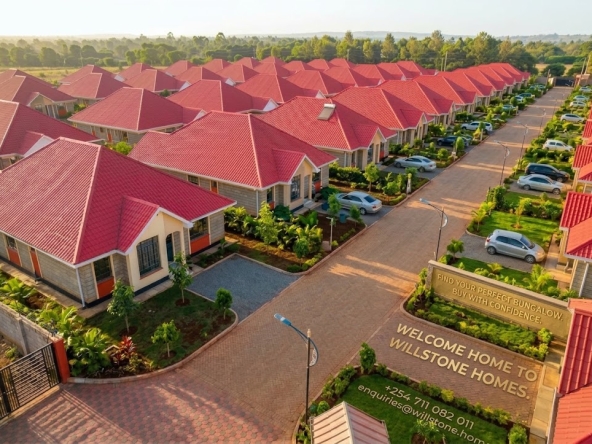
For families considering gated community homes in Kenya, the compound therefore deserves attention beyond its appearance.
Ask how the outdoor spaces might serve the family at different stages of life.
A space designed for children today might become a peaceful sitting area tomorrow.
That is not wasted space.
It is adaptable space.
A Larger Home Is Not Automatically a Better Home
There is an important distinction between having enough space and having too much space.
When children are young, additional bedrooms can be extremely useful.
But as the household becomes smaller, maintaining a very large property can become more demanding.
Cleaning, repairs, landscaping, security and general maintenance all require time and money.
This is why the long-term cost of a home deserves consideration alongside its purchase price.
When buying a home in Kenya, buyers can think beyond the initial affordability question:
Can we comfortably maintain this home when our household becomes smaller?
A property that remains manageable over time can provide a different kind of value from one that simply offers the maximum number of rooms.
The Home Can Become More Important as Life Slows Down
There is also an interesting reversal that happens in many families.
When children are young, parents may spend much of their time outside the home because of work, school runs, shopping and other responsibilities.
Later in life, the home can become the centre of daily life.
The priorities may shift towards quietness, accessibility, convenience, security and comfort.
A home that worked well for a young family can therefore remain valuable if its design and location continue to support changing needs.
This is particularly relevant when choosing homes for sale in Nairobi and Kiambu or other areas where buyers are thinking about long-term ownership rather than a short-term property purchase.
Location Can Matter More With Time
Young families often think about location in terms of commuting to work and getting children to school.
Those considerations remain important.
But as homeowners grow older, other services may become increasingly significant.
Access to healthcare, shopping, banking, places of worship, social activities and reliable transport can influence the practicality of a location.
The location that makes sense for a family today should ideally have enough surrounding infrastructure to remain useful tomorrow.
This is one reason property buyers should examine not only the house itself, but also the neighbourhood that will surround it.
The Home Can Become a Family Anchor
Perhaps the most interesting thing that happens when children leave is that the meaning of the home can change.
When the children were young, the house was primarily a place where the family lived.
Later, it can become the place that keeps the family connected.
The children may have their own homes, careers and responsibilities. They may live in different parts of Kenya or in other countries.
Yet there can still be one place that everyone recognises as home.
That place may host Christmas lunch, family meetings, birthdays, weddings, grandchildren’s visits and countless ordinary gatherings.
The house becomes more than accommodation.
It becomes a family reference point.
Think About the Empty-Nest Years Before They Arrive
Nobody buys a family home hoping that the children will leave quickly.
But responsible homeownership requires thinking about the entire journey.
A house can be exciting when the family moves in, practical while the children are growing and deeply meaningful long after they have left.
That is why adaptability should be part of the conversation when considering homes for sale in Kenya.
The question is not simply whether a house has enough bedrooms today.
It is whether those rooms, the compound, the location and the overall design can continue to serve the people who own it as their lives change.
Read Also: Why Buyers Remember a Handover Day More Than a Floor Plan
A Home Should Have Room for the Future
The most successful family homes are not necessarily the ones that remain exactly the same throughout their owners’ lives.
They are the homes that can change meaning without losing their value.
A child’s bedroom can become a guest room.
A play area can become a garden.
A busy family lounge can eventually become a quieter living space.
And the home that once accommodated a growing family can eventually become the place where that same family comes together again.
At Willstone Homes, we believe that a home should be considered not only for the life you are living today, but also for the chapters that come afterwards.
Because children eventually leave home.
But that does not mean the home stops being a home.
Sometimes, it simply becomes something different: a place where the next generation returns.
Read Also: When a Dream Home Develops Cracks: What Athi River Homeowners Can Teach Kenya’s Property Buyers