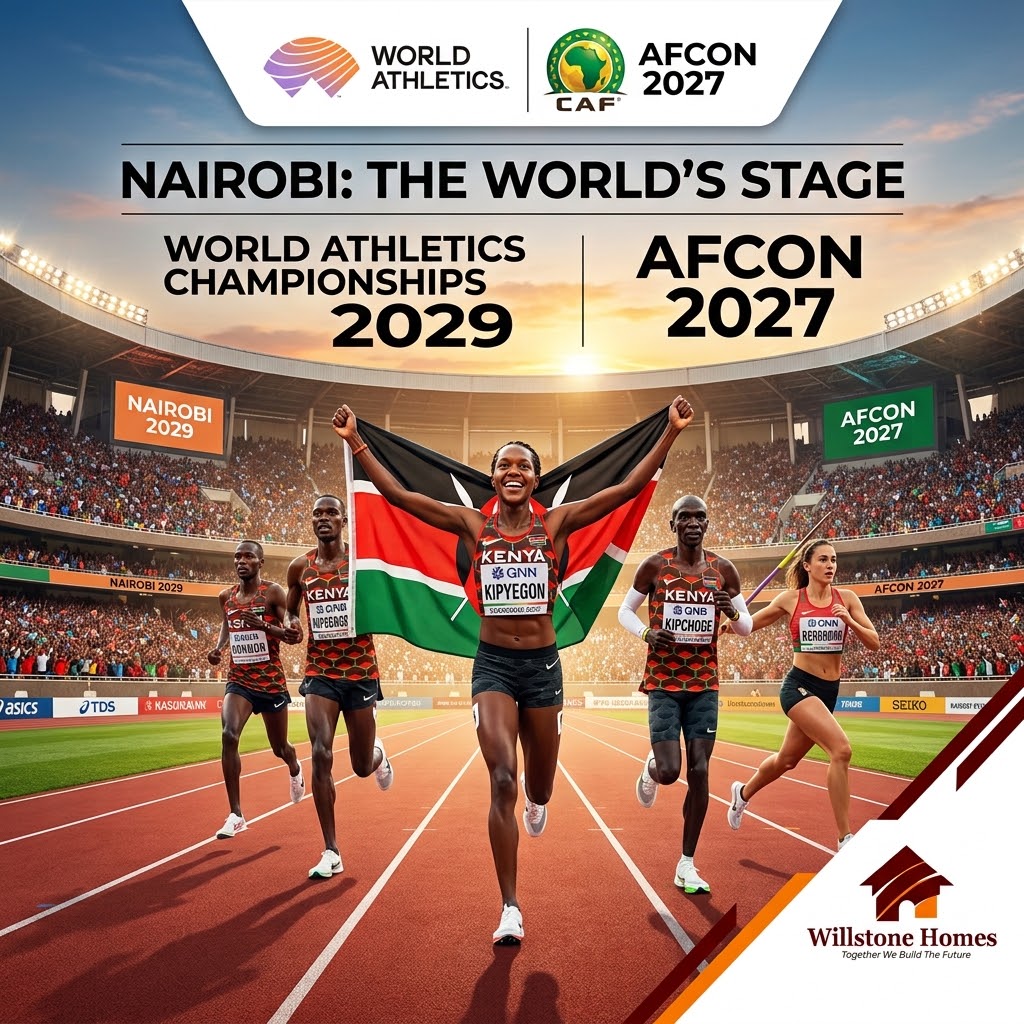
Nairobi’s historic selection as the host city for the 2029 World Athletics Championships—making Kenya the first African nation to stage the senior global event—is being celebrated as a crowning sporting achievement. However, beneath the national pride and global media focus lies a far more enduring story: the structural transformation of the Nairobi Metropolitan real estate sector.
For property buyers, land developers, and institutional investors, a global sporting event of this scale is rarely about the tournament itself. It is about the accelerated capital deployment into urban infrastructure, transit networks, and commercial density required to host the world.
1. The Kasarani Magnet & The Thika Road Growth Corridor
Moi International Sports Centre Kasarani serves as the principal competition venue for 2029. Historically, sports venues in isolation rarely drive surrounding real estate values. What does drive value is the infrastructure mandated to support them.
Host city obligations for World Athletics require seamless transport logistics, high-capacity utility grids, robust security infrastructure, and expanded accommodation networks.
- Last-Mile Transit Upgrades: Road feeder networks connecting the Thika Superhighway to surrounding suburbs are slated for expansion and rehabilitation.
- Utility Reliability: Dedicated power grids, upgraded water/sewerage systems, and high-speed fiber lines installed for the event permanently raise the liveability index of adjacent neighborhoods.
- Corridor Spillover: Areas directly along the northern transit spine—such as Kasarani, Kahawa West, Ruiru, and Juja—stand to gain heightened connectivity to Nairobi’s primary economic nodes.
Read Also: The Compound Test: What Your Home Reveals About the Life You Actually Live
2. Short-Term Rental Surge vs. Long-Term Capital Appreciation

Understanding real estate dynamics around mega-events requires separating temporary demand spikes from permanent structural value.
                  2029 WORLD ATHLETICS REAL ESTATE IMPACT
 ┌───────────────────────────────────┐ ┌───────────────────────────────────┐
 │       SHORT-TERM VISITOR WAVE     │ │    LONG-TERM INFRASTRUCTURE LEGACY│
 ├───────────────────────────────────┤ ├───────────────────────────────────┤
 │ • Serviced apartments & short-lets│ │ • Permanent road network upgrades │
 │ • High seasonal rental yields     │ │ • Expanded utility & fiber capacity│
 │ • Hospitality & retail revenue    │ │ • Sustained land value growth     │
 └───────────────────────────────────┘ └───────────────────────────────────┘
- Short-Term Yield Opportunities: Tens of thousands of international athletes, media personnel, and visitors will flood Nairobi. This creates a lucrative window for short-stay residential models (flexible serviced apartments, Airbnb-style units, and boutique hospitality concepts) along major arterial routes.
- Long-Term Asset Value: Long after the closing ceremony, the physical infrastructure remains. A widened road, upgraded railway spur, or new utility line continues to reduce commute times and lower operational costs for homeowners and commercial tenants for decades.
Read Also:Banks Brace for Real Estate Loan Trouble Even as NPL Ratio Falls
3. The Expansion of Satellite Towns & Housing Demand
The buildup to 2029 will accelerate Nairobi’s ongoing decentralization. As inner-city land becomes denser and costlier, infrastructure expansion pushes viable residential growth further into satellite nodes across Kiambu and broader Nairobi Metropolitan borders.
Locations such as Ruiru, Juja, Kiambu Road, and Kangundo Road are increasingly positioned as key residential sanctuaries for middle-income buyers. Enhanced mobility enables commuters to live in spacious, master-planned satellite communities while maintaining efficient transit access to core urban centers.
Furthermore, job creation in construction, hospitality, logistics, and facilities management throughout the 5-year preparation window will expand the domestic workforce seeking quality rental and homeownership options.
4. An Investor’s Checklist: Evaluating the 2029 Opportunity

A major sporting announcement should never trigger blind land speculation. Long-term wealth creation requires grounding decisions in solid real estate fundamentals:
- Focus on Corridors, Not Stadiums: Do not buy property solely because it is near a venue. Buy where road, rail, and utility connectivity will permanently improve daily life.
- Analyze the 10-Year Timeline: Homeownership and land investment are long-duration decisions. Look at where population growth, retail centers, and schools will cluster five to ten years from today.
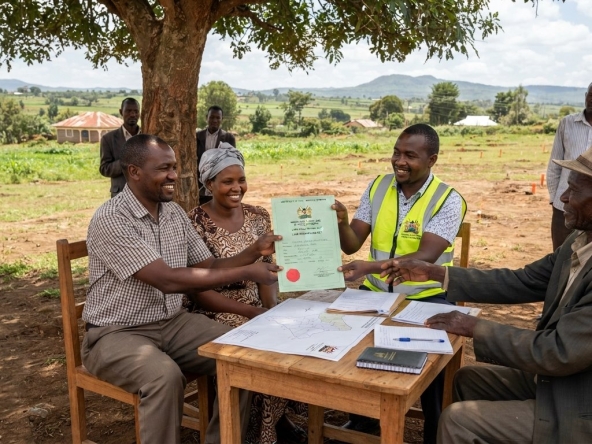
- Prioritize Title & Developer Verification: Infrastructure upgrades often bring increased activity to surrounding land. Strict due diligence on land ownership, zoning permits, and developer credibility remains non-negotiable.
Positioning for the Next Growth Cycle
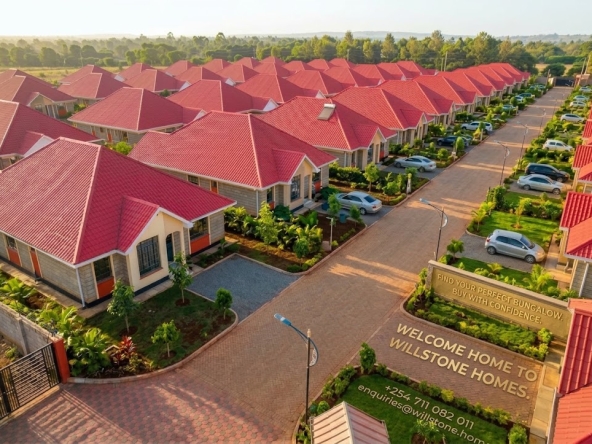
For strategic residential developers like Willstone Homes, the 2029 World Athletics Championships validates a core thesis: Nairobi’s peripheral growth corridors are where long-term value is unlocked. By developing gated residential communities and verified land options in rapidly expanding hubs across Nairobi and Kiambu, buyers gain exposure to the metropolitan area’s overarching infrastructure momentum.
The running track will host the world for a few weeks in September 2029. But the roads, transit links, and master-planned residential corridors built in its honor will shape where Nairobi lives, works, and invests for a generation.
Prolific Sports Infrastructure Securing Nairobi 2029
This video offers a brief highlight on the sports infrastructure readiness that helped Nairobi secure the historic bid for the 2029 World Athletics Championships.