Kenya’s proposed Dangote refinery is rapidly evolving from an energy headline into a major real estate development catalyst. President William Ruto recently announced a KSh7.5 billion commitment to construct 3,000 housing units in Lamu County to accommodate the expanding workforce expected as the refinery project takes shape. For Kenya’s property market, this development provides a concrete case study in how large-scale industrial investment stimulates housing demand, commercial real estate, and land values far beyond the perimeter of the facility itself.
1. The Lamu Catalyst
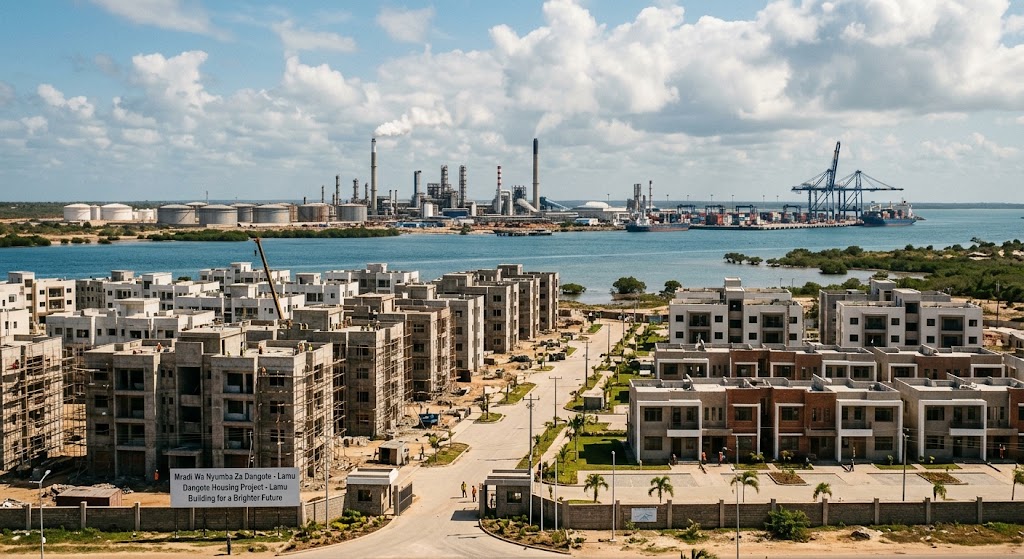
Large-scale industrial development projects fundamentally transform local economies by attracting multiple tiers of employment. Direct job creation at the refinery triggers secondary demand for contractors, logistics operators, engineers, and support service providers. As these workers relocate, they generate immediate property demand for residential real estate across various price points and tenure types.
The announcement of 3,000 housing units signals a shift from speculative interest to structured urban growth. Rather than letting informal settlements or rapid housing deficits emerge, state-backed housing anchors the initial population growth, providing a foundation upon which a modern, multi-layered property market can develop. In this way, housing demand follows employment, creating a sustainable cycle between job creation and neighborhood growth.
2. The Property Ecosystem
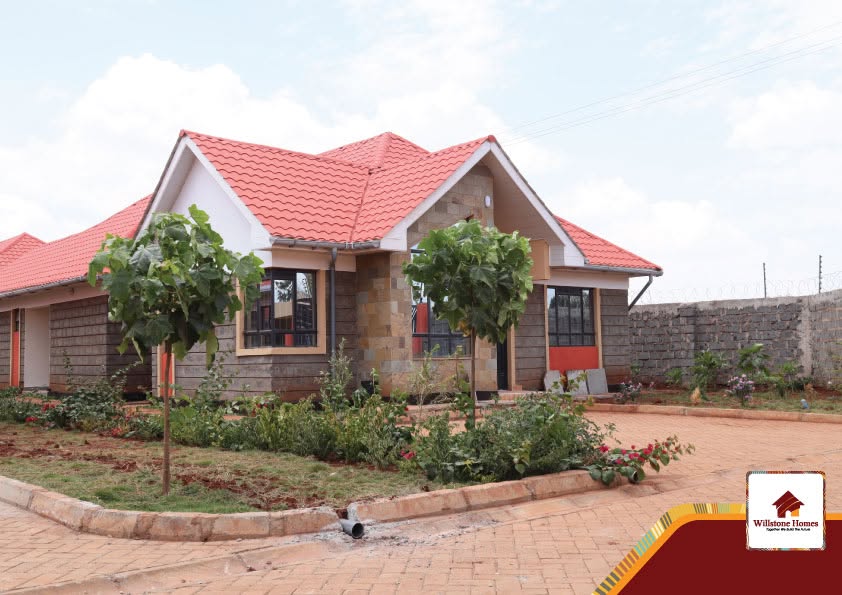
While 3,000 housing units represent a significant state commitment, they address only a portion of the long-term housing requirement generated by industrialization. To complement this, the government has announced approximately KSh6 billion for affordable housing, markets, and student hostels, alongside a call for private land investors and developers to build hospitality and commercial facilities.
When an economic hub expands, real estate growth rarely remains confined to single-family homes or basic staff quarters; an integrated property ecosystem naturally emerges around the workforce.
| Real Estate Segment | Potential Demand Driver |
| Residential Property | Workers and families relocating to Lamu real estate nodes |
| Rental Housing | Employees and contractors seeking flexible accommodation |
| Affordable Housing | Lower- and middle-income workers in the industrial sector |
| Commercial Property | Businesses serving the growing population and local workforce |
| Hospitality | Contractors, investors, executives, and business visitors |
| Retail Property | Growing consumer demand for shops, services, and supermarkets |
| Industrial & Logistics | Suppliers, warehousing, transport operators, and support businesses |
| Land Investment | Strategic expansion parcels situated along primary growth corridors |
As residential clusters solidify, commercial real estate follows naturally. Businesses require shops, supermarkets, offices, and medical clinics to serve the expanding population, gradually transforming isolated residential projects into vibrant mixed-use communities.
3. Infrastructure as the Value Enabler
A major industrial facility alone cannot guarantee sustained property appreciation. The long-term effect of the refinery on Lamu real estate values will depend heavily on the quality and pace of infrastructure development, including paved roads, electricity grids, water supply, and telecommunications.
Accessibility is particularly critical for any real estate development. Properties situated close to employment hubs but poorly connected to roads and utility services may not perform as well as land within properly planned development corridors. Land positioned along key transit routes connected to the Port of Lamu and the LAPSSET corridor stands to gain the most from regional economic activity and logistics expansion.
4. Due Diligence over Hype
While major project announcements create genuine growth opportunities, investors must distinguish between long-term property appreciation and speculative land price increases. Headline investment figures often trigger rapid market speculation, but proximity to a project does not automatically make every nearby plot a good investment.
Strategic investors look at economic fundamentals and prioritize real estate due diligence over market hype. Crucial evaluation factors include:
- Title Documentation & Ownership: Verifying legal ownership and ensuring properties are free from unresolved land disputes or compensation issues.
- Road Access & Utilities: Confirming reliable road connectivity, power access, and water availability.
- Zoning & Planning Regulations: Checking permitted development types under local planning authorities.
- Economic Pace: Assessing whether population growth and employment creation are actually materializing.
The Dangote refinery project has historically navigated legal and community issues surrounding land and compensation. These realities demonstrate why thorough due diligence remains essential before committing capital to land investment.
5. The Wider Lesson for Kenya’s Property Market

The dynamics unfolding in Lamu reflect a broader trend across Kenya’s property market. New industrial facilities, logistics hubs, transport infrastructure, or universities inevitably shift where people live and work, creating entirely new real estate micro-markets.
For developers, property buyers, and institutional investors, the primary takeaway is clarity of timing and evidence. The strongest opportunities in Kenya’s real estate sector are rarely found in fully saturated urban areas, nor in remote plots driven purely by hype. Instead, they emerge where infrastructure development, employment hubs, and genuine housing demand begin to converge.