
For decades, the golden rule of real estate investment in Kenya was simple: Location, Location, Location. If a property sat within two kilometers of a newly paved dual carriageway or a major bypass, capital appreciation was practically guaranteed.
However, as Nairobi’s metropolitan footprint expands rapidly into satellite towns like Ruiru, Juja, Syokimau, and Kitengela, a silent shift is reshaping property valuations. Commute times are no longer the primary driver of tenant satisfaction and rental yields.
Instead, a property’s operational autonomy—its ability to provide continuous, high-quality water and uninterrupted power independent of municipal failures—has emerged as the true benchmark for yield performance and capital growth.
The Operational Reality: A Tale of Two Estates
To understand how utility autonomy directly dictates investment metrics, consider two modern gated communities located in the same satellite node (e.g., Juja or Ruiru), both offering 3-bedroom, all-ensuite units at similar purchase price points.
Development A (Grid Dependent)               Development B (Autonomous Utility Model)
├── Municipal Water Connection               ├── High-Capacity On-Site Borehole
│   └── 3-day weekly rationing               │   └── Integrated Desalination/Softening Plant
├── Standard Grid Power                      ├── Commercial Solar PV + Smart Backup
│   └── Vulnerable to blackouts              │   └── Continuous common area & water pumping
└── Result: Vacancy spikes & defaults        └── Result: Zero downtime, premium rents
Development A: Grid-Dependent Baseline
- Water Infrastructure: Relies entirely on county municipal lines. Water is rationed to 2 or 3 days a week. Households are forced to purchase water from private bowsers at exorbitant rates (KSh 2,500 – KSh 4,000 per tank).
- Power Infrastructure: Dependent solely on the national grid without centralized backup solar or automated generator integration.
- Service Charge Friction: High utility costs inflate service charges, leading to tenant disputes, frequent maintenance levies, and service defaults.
Development B: The Autonomous Utility Model
- Water Infrastructure: Features a high-yield industrial borehole paired with an on-site reverse osmosis (RO) or water-softening filtration plant, delivering clean, pressurized water directly to every tap 24/7.
- Power Infrastructure: Outfitted with integrated commercial solar PV systems powering perimeter lighting, automated gates, water pumps, and shared streetlights, alongside dedicated back-up systems.
- Service Charge Stability: Low, predictable operational overhead yields high tenant satisfaction and zero service charge defaults.
Read Also: From Kickoff to Handover: What Spain’s World Cup Victory Teaches Us About Off-Plan Homeownership
The Financial Math: How Utility Autonomy Drives Net Yields
Utility reliability directly influences two critical variables in real estate cash flow: occupancy retention and net operational expense.
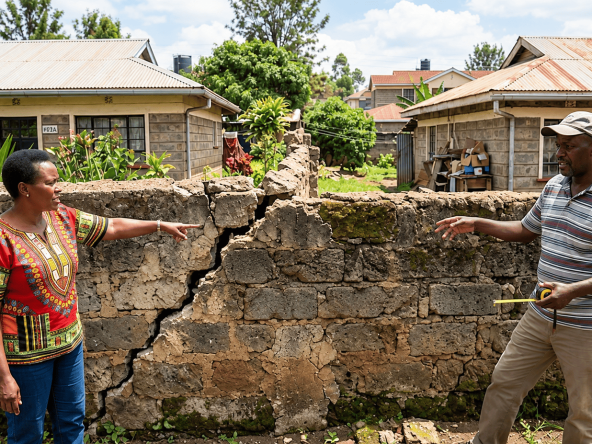
When a tenant in a grid-dependent estate spends an extra KSh 6,000 to KSh 10,000 monthly on private water bowsers and diesel generator fuel, that expenditure comes directly out of their housing budget. Over time, frustration leads to high tenant turnover, prolonged vacancy periods, and eventual rent stagnation.
Conversely, autonomous estates command a 10% to 15% rent premium while maintaining virtually zero structural vacancy.
| Performance Metric | Development A (Grid-Dependent) | Development B (Utility Autonomous) |
| Average Monthly Rent (3-Bed) | KSh 45,000 | KSh 52,000 |
| Annual Structural Vacancy | 1.5 Months (12.5%) | 0.2 Months (1.6%) |
| Gross Annual Rental Income | KSh 472,500 | KSh 613,600 |
| Tenant Water Top-Up Expenses | ~KSh 60,000 / year | KSh 0 |
| Service Charge Default Rate | High (~25%) | Negligible (<2%) |
| Effective Net Rental Yield | ~6.2% | ~8.8% |
The Investor Takeaway: The autonomous estate generates over KSh 140,000 in additional net annual cash flow per unit simply by eliminating operational friction. Over a 5-year holding period, this yield gap compounds into significantly higher capital appreciation when the asset is valued on its net operating income.
Read Also : Nairobi County Unveils New Building Fees & Zoning Rules for Landlords
How Forward-Thinking Developers Are Solving the Equation
The shift toward off-grid utility infrastructure requires deliberate engineering from the master-planning stage. Retrofitting a completed estate with industrial boreholes, filtration plants, and solar grids is far more expensive than building them into the original project design.
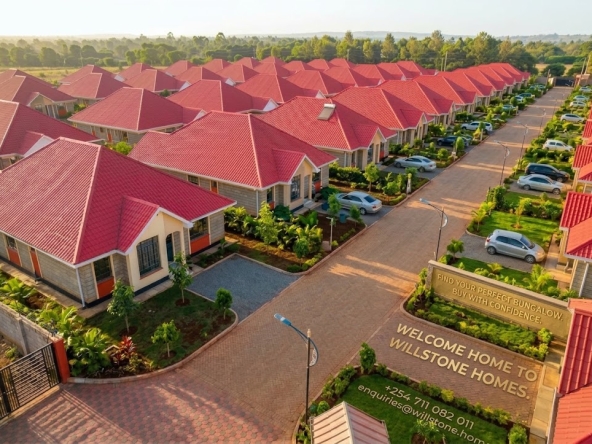
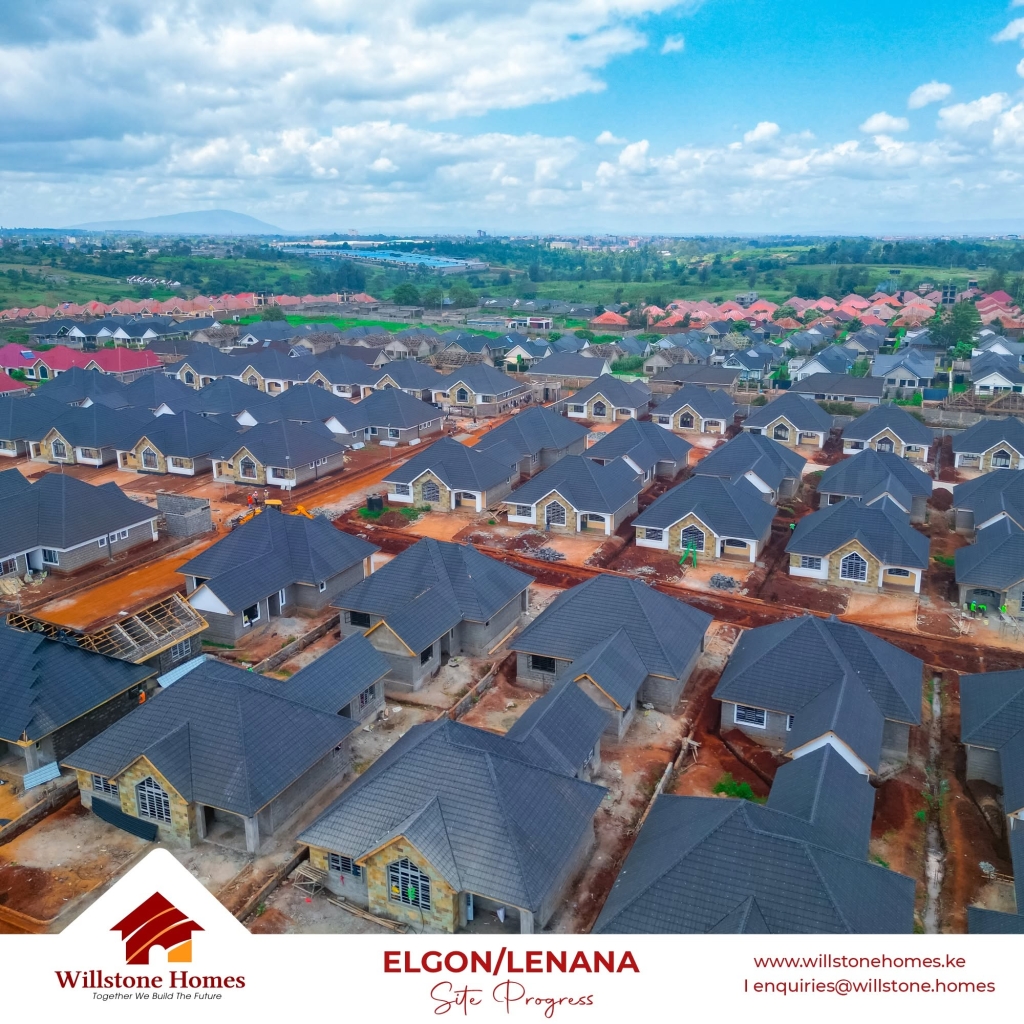
Leading developers in Kenya’s satellite corridors have already moved away from relying on municipal promises. Willstone Homes, for instance, has integrated full off-grid utility autonomy as a baseline standard across its master-planned gated communities—such as Mang’u Grove Estate, Manna Residence, and Windsor Ridge.
By embedding high-capacity industrial boreholes, integrated water treatment infrastructure, cabro-paved drainage networks, and solar-backed common utilities directly into project delivery, Willstone Homes de-risks the investment for home buyers from day one.
For investors, this infrastructure-first approach translates directly into lower tenant turnover, reduced service charge friction, and predictable rental yields that outperform grid-dependent properties across satellite towns.
The Strategic Takeaway for Real Estate Investors
As energy prices fluctuate and municipal water rationing remains a persistent reality across expanding urban centers, assessing a property solely by its highway proximity is a strategy of the past.
True capital protection and yield resilience sit underground and on the roof. When evaluating your next property acquisition, look past the granite countertops and ask the foundational questions: Where does the water flow from when the municipal taps dry up, and what keeps the lights on when the grid fails?
Developers who build the answers into their foundation are the ones delivering lasting asset value.
Read Also: When Diaspora Cash Contracts: What the Remittance Drop Means for Kenyan Real Estate