
The recent headline from the Business Daily—“Diaspora cash in biggest fall since global financial crisis”—serves as a stark signal for the macroeconomic landscape in Kenya. Grounded in data from the Central Bank of Kenya (CBK), monthly remittance inflows dropped sequentially from a high of KSh 58.2 billion ($450.3 million) earlier in the year down to KSh 48.5 billion–49 billion ($375 million–$397 million). This marks the sharpest multi-month contraction in remittance growth since 2009, when the US housing market collapse and European debt crisis severely constrained overseas earnings.
For a nation where annual diaspora inflows regularly cross the $4 billion mark—competing with tea, coffee, and tourism as a primary foreign exchange earner—a sustained dip carries heavy implications. Crucially, an estimated 20% to 30% of private residential real estate investment in Kenya is funded directly or indirectly by Kenyans living abroad.
When living costs, energy prices, and interest rates squeeze disposable incomes in the US, Europe, and the Middle East, remittance capital undergoes a forced reallocation: money sent home pivots away from long-term property acquisition toward immediate household survival—food, healthcare, and school fees.
Foreign Disposable Income Squeezed ──► Pivot to Family Survival Expenses ──► Capital Withdrawn from Property
                                                                                   │
    ┌───────────────────────────────────┬──────────────────────────────────────────┴──────────────────────────┐
    ▼                                   ▼                                                                     ▼
Speculative Land Freezes        Off-Plan Cash Crunch                                                 Flight to Yield
(Raw plot sales stagnate)       (Developer milestone delays)                                         (Completed, cash-flowing units)
If this diaspora pullback persists over the short to medium term (6 to 18 months), several structural realignments will shape the Kenyan property landscape.
1. Cash-Flow Friction in Off-Plan Developments
The off-plan residential model thrives on predictable, recurring installment payments. Diaspora buyers frequently secure homes on structured terms—typically paying a 20% deposit followed by milestone payments over 12 to 24 months.
- Milestone Defaults & Extensions: Squeezed overseas incomes lead to delayed installments or outright default on ongoing contracts.
- Developer Liquidity Traps: Mid-tier and un-backed private developers who rely on buyer cash flows rather than institutional project finance to construct will face immediate cash crunches.
- Stalled Sites & Loss of Trust: Construction timelines will stretch, increasing project completion risks and dampening broader consumer confidence in off-plan models.
2. Freeze on Speculative Land Transactions
During peak remittance cycles, significant diaspora capital flows into land banking—purchasing unserviced 1/8th-acre plots in far-flung satellite towns purely for speculative 5-to-10-year capital appreciation.
- Market Stagnation: Raw, unserviced land is the first asset class buyers abandon when liquidity tightens. Transaction volumes across fringe suburban corridors face sharp drops.
- Price Plateauing: Land-buying companies that previously relied on aggressive diaspora marketing tours will be forced to restructure terms, cut prices, or offer extended payment periods to attract local buyers.
3. High-End Urban Market Repricings
The upper-tier urban segment (units priced above KSh 15 Million in pockets like Kilimani, Lavington, and Westlands) relies on high-earning diaspora investors seeking buy-to-let apartments or retirement properties.
- Inventory Overhang: Absorption rates for luxury urban apartments will slow, pushing up vacancy rates in newly completed developments.
- Discounting & Lease-to-Own: Developers holding high-end inventory will increasingly pivot toward discounted cash sales, lease-to-own models, or extended flexible payment arrangements to clear stock.
4. Flight to Quality: Resilience in Middle-Income Built Housing
While speculative land and luxury segments experience a slowdown, middle-income housing (KSh 4.5M – KSh 8.5M) in established suburban hubs—such as Ruiru, Juja, Syokimau, and Kitengela—remains far more resilient.
| Market Segment | Vulnerability | Short-Term Realignment |
| Speculative Land Plots | High | Transaction volume drops sharply; land prices plateau in fringe corridors. |
| Off-Plan Projects | Moderate-High | Increased payment delays; developer construction timelines stretch. |
| Luxury Urban (KSh 15M+) | Moderate | Slower absorption; developer price cuts and lease-to-own incentives. |
| Middle-Income Built Housing | Resilient | Steady end-user demand; focus shifts to completed, rental-ready homes. |
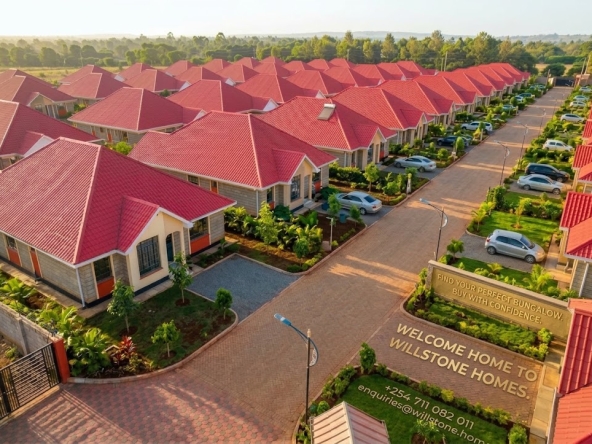
Rather than exiting the market entirely, the diaspora capital that does remain active will undergo a flight to safety. Investors will turn away from off-plan promises or raw land plots toward built, tenant-ready properties (such as modern gated-community bungalows and maisonettes) that can immediately generate rental income to cover holding costs.
The Broader Sector Outlook
The sharp drop in diaspora cash will not trigger a structural collapse of the Kenyan real estate sector. Instead, it acts as a market corrector. The slowdown forces developers away from speculative, overpriced inventory toward fundamentally sound, cash-flowing middle-income housing supported by real end-user demand.
Summary: The short-term forecast for Kenyan real estate is defined by a shift from speculation to utility. Capital will bypass long-term land banking and high-end luxury to settle in secure, completed, affordable family housing within established commuter nodes.