
Kenya’s rollout of the Digital Nomad Work Permit (Class N) is more than a policy shift—it’s a demand shock quietly reshaping Nairobi’s rental market.
In high-demand zones like Westlands and Kilimani, landlords are pivoting fast—from traditional leases to short-stay, work-ready apartments targeting global remote workers.
And the numbers—and behavior—suggest this shift is just getting started.
A Market Ripe for Disruption
Kenya is uniquely positioned to benefit from the global remote work boom:
- Population: 58.6 million (2026)
- Nairobi: A leading regional business and tech hub in East Africa
- Tourism + lifestyle appeal: a major contributor to the economy
Globally, the digital nomad population is estimated in the tens of millions, with Africa increasingly viewed as the “next frontier” due to cost advantages and lifestyle appeal.
Kenya’s edge?
- English-speaking environment
- Strong mobile money ecosystem (M-Pesa)
- Growing fiber internet penetration
- Attractive cost of living compared to Europe/US
The Shift: From Tenants to “Temporary High-Value Guests”

Traditional rental model in Nairobi:
| Feature | Old Model |
|---|---|
| Lease duration | 12 months |
| Furnishing | Bare / Semi |
| Tenant profile | Local professionals |
| Yield | Stable but capped |
New model emerging in Westlands & Kilimani:
| Feature | New Digital Nomad Model |
|---|---|
| Stay duration | 1–6 months |
| Furnishing | Fully furnished + styled |
| Tenant profile | Foreign remote workers |
| Yield | Higher, but variable |
| Platform | Airbnb / short-stay |
Why Westlands & Kilimani Are Ground Zero
These areas dominate early adoption because they already meet key digital nomad requirements:
- Close to embassies, malls, and nightlife
- High concentration of furnished apartments
- Established expat ecosystem
- Reliable access to fiber internet
But here’s the twist:
👉 Location alone is no longer enough.
The New “Location, Location, Location”
Digital nomads are redefining property value around functionality, not just geography.
1. Power Reliability = Income Protection
Kenya’s grid can be inconsistent, and remote workers cannot afford downtime.
Properties with:
- Solar backup
- Inverters
- Battery systems
…are commanding premium occupancy rates.
2. Internet Speed Is Non-Negotiable
Fiber connectivity from providers like Safaricom and Zuku is now a baseline expectation.
A slow connection = bad reviews = lost revenue.
3. Work-From-Home Design Is the New Luxury
Forget chandeliers.
Today’s high-paying tenant wants:
- Ergonomic desk setups
- Natural lighting
- Sound insulation
- Minimalist, clean interiors
This is functional luxury, not decorative luxury.
Read Also:Are Developers Moving Faster Than Urban Planning in Kenya’s Booming Property Market?
Pricing & Yield Dynamics (What the Data Suggests)

While exact figures vary by unit and occupancy, market behavior is clear:
| Metric | Long-Term Rental | Short-Stay (Nomad Model) |
|---|---|---|
| Monthly rent | Lower | 1.5x – 3x higher potential |
| Occupancy | Stable | Fluctuates (60–85%) |
| Management effort | Low | High |
| Setup cost | Low | High (furnishing + tech) |
👉 The upside exists—but only with professional execution.
Macro Pressures Reinforcing the Shift
Recent economic signals are also accelerating this transition:
- Inflation hit 5.6% in April 2026, driven by fuel and living costs
- Rising costs are pushing landlords to seek higher-yield strategies
- Developers are slowing new supply, tightening quality competition
This creates a perfect storm:
👉 Fewer new builds + higher costs + global tenants = premium for optimized units
The Hidden Risk Most Investors Ignore
This model is often marketed as “easy money.”
It isn’t.
Short-stay real estate behaves more like hospitality than property investment:
- Guest turnover management
- Cleaning and maintenance cycles
- Listing optimization
- Review management
Without systems, returns collapse quickly.
The Real Opportunity (Where Smart Developers Should Focus)

Instead of converting old apartments, the smarter play is:
Build for Digital Nomads from Day One
Winning features for 2026+ developments:
- Studio + 1-bedroom optimized layouts
- Integrated workstations
- Solar + inverter systems built-in
- Fiber-ready infrastructure
- Co-working lounges within gated communities
- Lifestyle add-ons (gyms, cafés, green spaces)
Read Also:The Rise of the ‘Middle-Class Luxury’ Market in Kenya
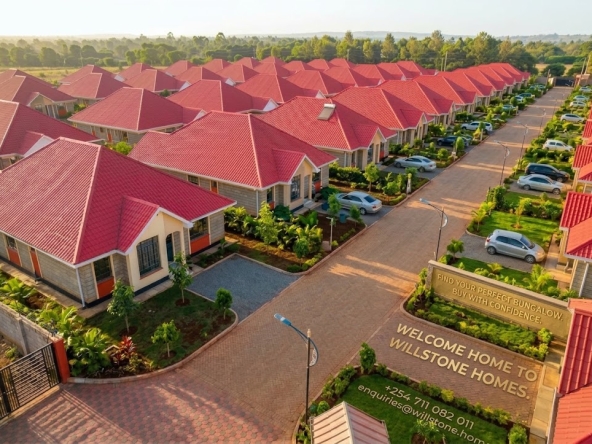
Strategic Insight for Gated Community Developers
This is where it gets interesting for players like you.
Most gated communities in Kenya still target:
- Families
- Long-term buyers
But a new hybrid model is emerging:
👉 “Nomad-ready gated communities”
Think:
- Fully serviced units
- Flexible leasing options
- Centralized management (Airbnb-style)
- Shared productivity spaces
This could unlock:
- Higher per-unit revenue
- Faster absorption rates
- Stronger brand differentiation
Kenya’s Digital Nomad Visa is not just attracting foreigners—it’s reshaping the economics of urban housing.
In hotspots like Westlands and Kilimani:
- The best-performing units are no longer the biggest…
- Or even the most luxurious…
They are the most reliable, connected, and work-ready.
Final Takeaway
In 2026, real estate value in Nairobi is shifting from “where you live” to “how well you can live and work there.”
Read Also :Apartment Prices Are Falling in Nairobi—But Here’s Where Smart Money Is Moving