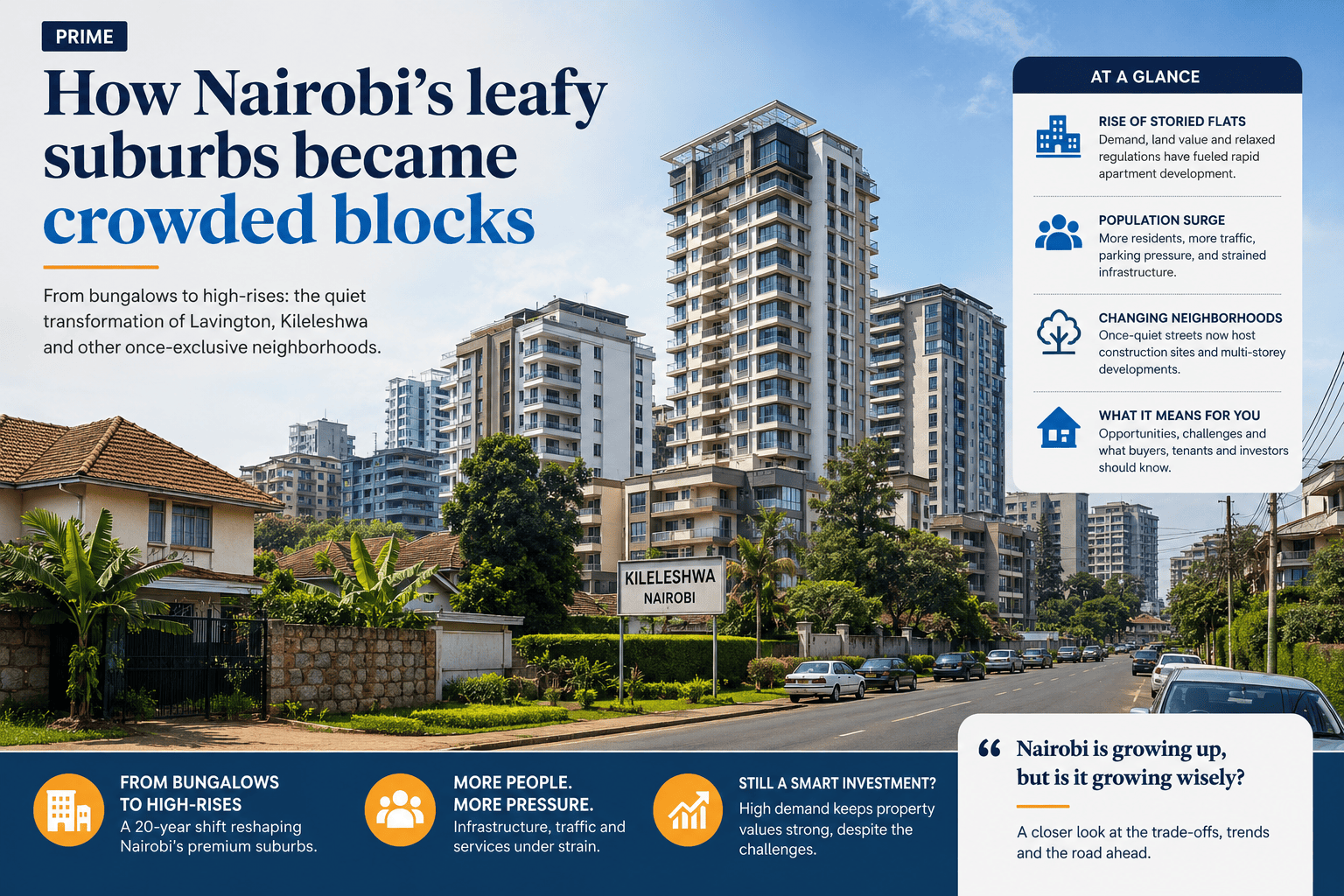
For decades, acquiring property in Nairobi Kenya—specifically within upscale pockets like Kilimani, Kileleshwa, and Lavington—was viewed as the ultimate mark of success. These traditional “leafy suburbs” offered low-density living, expansive mature gardens, and serene privacy.
However, recent shifts in the Nairobi real estate market reveal a dramatic transformation. Driven by soaring land values (where prime urban parcels command up to KSh 400 million per acre), property developers in Nairobi have aggressively pushed vertical limits to maximize project viability. Single-family plots have been redeveloped into multi-story high-rises, turning former suburban quietude into congested corridors with window-to-window proximity.
This rapid densification is fundamentally altering the Kenya property market, prompting savvy buyers, family home-seekers, and Kenya diaspora property investment strategists to ask a vital question: Is high-density vertical living still the best use of real estate capital?
1. The High-Rise Dilemma: Saturated Supply and Softening Yields
While urban apartments offer central convenience, current Nairobi property market trends highlight growing pressure on inner-city high-rises:
- Oversupply & Price Corrections: Data from the Kenya National Bureau of Statistics (KNBS) indicates that high-end apartment prices experienced annual corrections (falling nearly 4.8% year-on-year). With hundreds of new units coming online monthly, competition for long-term tenants has intensified.
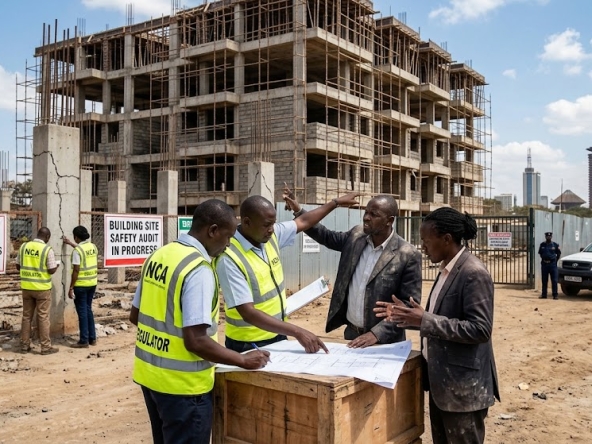
- Infra-Structure Strain: The expansion of high-rises has put immense pressure on local municipal drainage, sewer capacities, and road networks, leading to peak-hour traffic congestion and frequent municipal water shortages.
- Shift in Amenity Value: Developers have attempted to replace physical space with stacked amenities—such as rooftop gyms, co-working spaces, and concierge desks. Yet, for families looking to buy house in Nairobi, indoor communal lounges rarely substitute for private lawn space and peaceful surroundings.
2. The Rise of Master-Planned Gated Communities
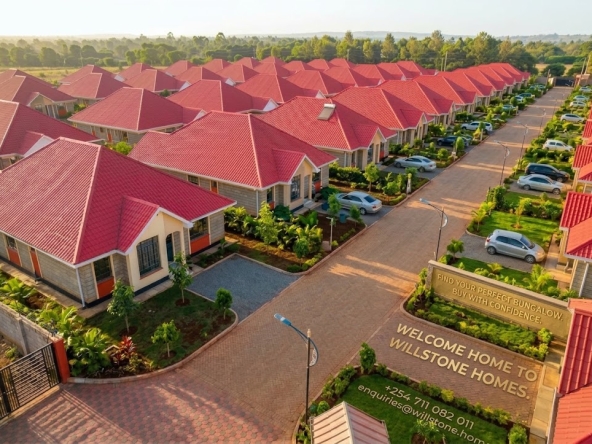
As high-density living reaches a tipping point, capital is migrating toward low-density gated communities in Nairobi and its surrounding satellite corridors (such as Kangundo Road, Ruiru, Juja, and Athi River).
For homebuyers seeking affordable houses in Nairobi and investors evaluating real estate returns in Kenya, suburban standalone developments present a clear structural edge:
A. True Ownership of Land
Unlike vertical apartments where buyers hold fractional sectional titles, investing in townhouses for sale Nairobi or standalone bungalows gives you direct ownership of the underlying land plot. In the long run, land appreciates while high-rise concrete structures depreciate and demand high ongoing maintenance fees.
B. Off-Grid Autonomy and Modern Infrastructure
Leading real estate developers in Kenya are now building self-sustaining master-planned estates equipped with:
- Solar Power & Battery Storage: Reducing dependence on grid power outages.
- Boreholes & Water Treatment Systems: Guaranteeing 24/7 water availability.
- Modern Perimeter Security: Gated entry points, CCTV surveillance, and solar street lighting that ensure absolute peace of mind.
C. Superior Family Living
Suburban gated compounds prioritize lifestyle quality: dedicated green spaces, private backyards, safe play areas for children, and organized estate management—delivering the authentic suburban experience that inner-city suburbs used to hold.
3. Investor Breakdown: High-Rise Yield vs. Land-Backed Capital Growth
When analyzing real estate investment Kenya, long-term success depends on matching your property type to market fundamentals:
| Factor | Inner-City Apartments (e.g., Kilimani / Kileleshwa) | Suburban Gated Estates (e.g., Satellite Corridors) |
| Primary Property Type | Studio, 1–3 Bedroom High-Rises | 3–4 Bedroom Standalone Bungalows / Townhouses |
| Target Occupant | Transient renters, short-stay/Airbnb guests | Long-term owner-occupiers, stable family tenants |
| Asset Backing | Sectional Title (Shared Land) | Individual Land Title Deed |
| Oversupply Risk | High (Aggressive ongoing construction) | Low to Moderate (Controlled master planning) |
| Capital Appreciation | Moderate to Softening (Price corrections) | High (Driven by surrounding infrastructure growth) |
| Service Charge Burden | High (Lifts, pool maintenance, security) | Moderate (Controlled estate association fees) |
4. Advice for Diaspora Buyers: Securing Safe Property Investment in Kenya
If you want to buy property in Kenya from abroad, navigating the market requires prioritizing title security and hassle-free asset management:
- Focus on Title Deed Security: Verify that your purchase includes individual land ownership documentation rather than complex shared sectional title structures.
- Prioritize Master-Planned Infrastructure: Look for projects with built-in off-grid autonomy (solar, dedicated boreholes, paving, and perimeter fencing) so your property retains tenant demand regardless of municipal shortfalls.
- Partner with Verified Developers: Work directly with established property developers in Nairobi who have a proven track record of delivering titles and finished units on schedule.
Read Also: Air Rights & Rooftop Real Estate: Unlocking Kenya’s Next Property Frontier
Secure Your High-Yield Real Estate Investment Today
Whether you are looking for houses for sale in Kenya for your family or searching for top-tier property investment opportunities Kenya, moving beyond the crowded concrete jungle is key to unlocking sustainable capital growth.
Explore fully-furnished, master-planned gated bungalow estates featuring off-grid power, dedicated water security, and individual land titles today.
Contact Us:
Phone / WhatsApp: +254 711 082 011
Website: https://willstonehomes.ke/